Chapter 2 · Water
Private wells in an emergency: power, flooding, shock chlorination and testing
A well owner is their own water utility. When the power fails the pump stops, and when a flood reaches the wellhead the water can't be trusted until it has been disinfected and tested. Here is what to do, in what order, and why.
Read first: Store water
On city water, someone else tests the supply, treats it and warns you when it goes wrong. On a private well, nobody does. CDC says plainly that EPA's rules for public water systems don't apply to private wells, and that no government agency regulates, treats or checks the water from a private well. The owner is the utility.
That shows up in an emergency in two ways. When the power goes out, the pump stops, and with it every tap, toilet and shower in the house. And when floodwater reaches the well, the water can carry sewage, farm runoff and chemicals into the ground the well draws from, and it stays unsafe until the well has been disinfected and the water tested.
This page covers both, plus the routine testing that tells you whether the well was safe to begin with.
Before anything goes wrong
Know your well
Two numbers decide how much bleach a well needs and whether a hand pump could reach the water: the casing diameter and the depth of water in the well. Virginia Cooperative Extension explains how to find them:
- A well completion report (in Virginia, on file for wells built after 1992) or the driller's records give the total depth and the static water level, the distance from the top of the well down to the water.
- Depth of water = total depth − static water level. Its example: a 130-foot well with water 30 feet down holds 100 feet of water.
- If there are no records, it recommends having a licensed well driller take the measurements.
Also know what kind of well you have. CDC's procedures differ for drilled or driven wells and bored or dug wells. CDC notes that many bored and dug wells are shallow and have no lining, casing or grouting, so contamination can get in from the surface.
Keep the wellhead tight
EPA's checklist for well owners:
- Slope the ground so runoff drains away from the well.
- Fit a well cap or sanitary seal, and inspect it, the casing and the surface seals for cracks, corrosion and settling.
- Don't cut the casing off below ground level.
- Keep pesticides, fertilizers, fuel and degreasers away from the well, check fuel tanks, and never pour harsh chemicals into a septic system.
- Keep maintenance records, and use a certified driller for new wells, changes and closing old ones.
The reason is the oldest lesson in well water. The 1925 USDA bulletin Farmstead Water Supply records a 1916 case in Virginia: heavy rain backed up a house sewer, the water reached the pit at the top of a drilled well and ran down the outside of the casing, and within two weeks five of the family's eight children had typhoid fever; the eldest died. The bulletin's point: wells are polluted through an open or loose top and by foul drainage underground (see Fig. 2-4), so a deep well is only as safe as its top.
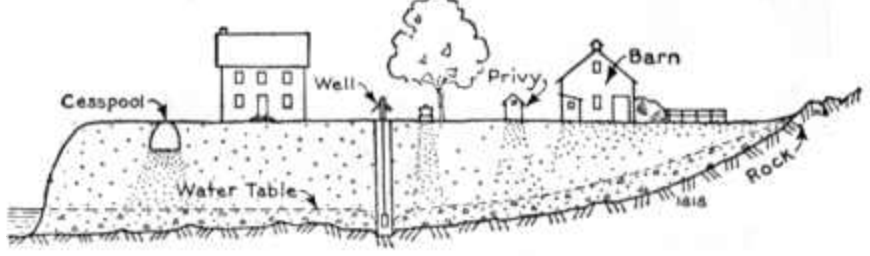
Fig. 4 (upper drawing) from USDA Farmers' Bulletin 1448, Farmstead Water Supply (1925), p. 5. Public domain; cropped.
When the power goes out
An electric well pump is just another motor on the house's circuits. No power, no water.
How much generator it takes. EWEB's generator sizing guide lists a 1/3-horsepower well pump at 1,000 running watts and 2,000 additional starting watts. Many pumps are larger, so check the pump's own rating. Starting watts matter most here, because a motor needs a short surge to start. Work through the method in what size generator you need.
How to connect it. If your pump is wired into the breaker panel rather than plugged into an outlet, running it from a generator takes a transfer switch or interlock installed by an electrician; see transfer switches and interlock kits.
Generators kill two ways
- Carbon monoxide from a generator run too close to the house: placement and alarms are in generator safety.
- Backfeeding the house wiring through an outlet instead of a transfer switch or interlock: why it can electrocute line workers is in transfer switches.
Fill containers while you have power. Our suggestion: with an outage forecast, fill water containers and the bathtub while the pump still runs. Finding water at home covers the water left in the pipes and water heater once it stops.
Hand pumps and the suction limit
A hand pump on the surface works by suction, and suction has a hard ceiling. The 1925 bulletin explains: even a perfect vacuum at sea level lifts water only 33.9 feet, and in its test an ordinary pitcher pump delivered 10.3 gallons a minute at low lift and nothing at all at 30 feet 2 inches. It took the safe working limit as 65% of the theoretical figure, and the limit drops as you go higher:
| Elevation | Theoretical lift (atmospheric pressure as feet of water) | Working suction limit |
|---|---|---|
| Sea level | 33.9 ft | 22.0 ft |
| 2,000 ft | 31.4 ft | 20.4 ft |
| 4,000 ft | 29.1 ft | 18.9 ft |
| 6,000 ft | 27.0 ft | 17.6 ft |
| 8,000 ft | 25.0 ft | 16.2 ft |
From Table 6 of Farmers' Bulletin 1448 (1925), which also gives the odd-thousand elevations. Lift is the vertical distance from the water level to the top of the pump cylinder.
So a surface hand pump only suits wells whose water stands within about 20 feet of the pump near sea level, and less at altitude. For deeper water, the bulletin describes pumps whose cylinder is lowered into the well, in or close to the water, and worked by a rod from the surface, so the pump no longer depends on suction.
A well bucket is the last resort. Kearny's 1979 civil-defense manual describes a bail-can: a can at least an inch narrower than the casing, with a loose flap valve in the bottom that opens as it sinks and closes as it's pulled up on a rope (see Fig. 2-5). He notes the catch: the pump and pipes in the well have to be removed first. Our suggestion: pulling a pump is work for a pump contractor, so ask one about it before you need it rather than during a crisis.
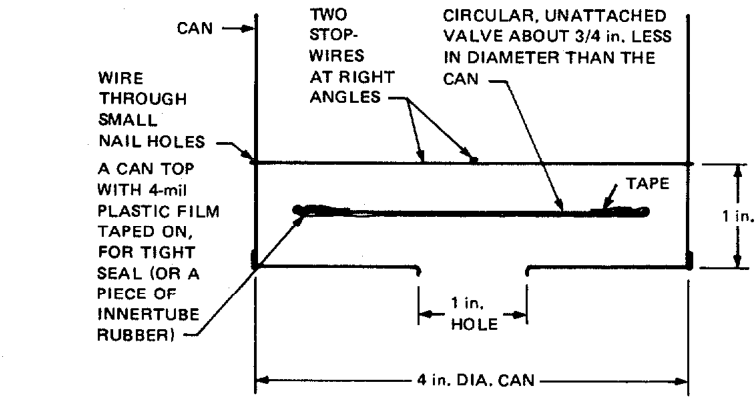
Fig. 8.10 from Cresson H. Kearny, Nuclear War Survival Skills, ORNL-5037 (Oak Ridge National Laboratory, 1979), p. 61. Treated as public domain: a government-funded report with no copyright claim (the 2003 preface is not used). Cropped.
When floodwater reaches the well
A flooded well: shock, gas and germs
- Don't turn on the pump. EPA warns of electric shock and damage to the well and pump, and says to stay away from the pump while it is flooded.
- Rubber boots and gloves are not enough protection from shock, says EPA. Don't touch flooded electrical equipment; have a qualified electrician, well contractor or pump contractor check the wiring before power is restored (EPA, CDC). Turn off the power to the well before clearing debris (CDC). If someone is shocked, call 911; see CPR and AEDs.
- Don't go into a well pit. CDC says gases and vapors can build up there.
- Don't drink or wash with the water. EPA says people who drink or wash with water from a flooded well risk getting sick.
- Fuel or chemical smell: CDC says boiling and disinfection won't make it safe. Use bottled water and call the health department.
Assume it's contaminated. EPA's 2005 flood sheet says wells more than 10 years old or less than 50 feet deep are likely to be contaminated even with no visible damage. Floodwater can loosen hardware and distort the casing, sediment can wear out the pump, and some wells collapse. If the cap wasn't tight, floodwater went straight in.
Who should do the work. CDC and EPA both say a flooded well is best disinfected by a well or pump contractor, and to contact your local or state health department or agricultural extension agent for advice first. The steps below are what those agencies describe, so you can follow the work or do it yourself if you must.
Until the water is tested, CDC says to drink bottled water, or boil well water at a rolling boil for 1 minute. EPA warns that after a wide flood a well may stay unsafe for many months, because septic waste and chemicals keep moving through the ground, so plan on repeated testing.
Shock chlorination: disinfecting the well
Shock chlorination means pouring a strong chlorine solution down the well and running it through every pipe and fixture, then letting it stand long enough to kill what's living in the system. Virginia Cooperative Extension says it is required after a new well is built and recommended after a positive coliform test, after any repair or maintenance, after flooding, or when there's another obvious source of contamination nearby.
It kills bacteria in the system. It doesn't fix the cause. Virginia Extension notes that if a failing septic system, a loose cap or a cracked casing keeps letting contamination in, the problem will return. It also says a capable do-it-yourselfer can do the job but that it can be challenging, and suggests considering a licensed well driller. And EPA says it doesn't remove pesticides, heavy metals or other chemicals.
Before you start
- Store 12 to 24 hours of other water for drinking and cooking; you can't use the well water during treatment (Virginia Extension).
- Bypass water softeners and treatment units. CDC says chlorine can damage softeners; Virginia Extension adds pressure tanks, filters and filter media. Check each maker's instructions.
- Protect yourself. Goggles, rubber gloves, boots, an apron and a ventilated area (Virginia Extension, CDC).
- Use plain, unscented liquid bleach. CDC says most is 5–9% sodium hypochlorite.
The steps (CDC, drilled or driven well)
- Turn off the power to the well and clear debris from the wellhead. Have the electrical system and pump repaired first if needed.
- Once the wiring and pump are safe to run, run the pump until the water is clear, through the outside faucet nearest the well, which keeps the dirty water out of the house plumbing. Without a pump, bail by hand.
- Close the valves to any water softener.
- Look up the bleach amount for your casing and water depth (table below).
- Mix the bleach with 3 to 5 gallons of water in a 5-gallon bucket.
- Remove the vent cap and pour the mixture in through a funnel, keeping it off electrical connections.
- Circulate it: run a hose from an outside faucet back into the well, and rinse the inside of the casing for 5 to 10 minutes. Virginia Extension says about 15 minutes, until the hose smells strongly of chlorine, and notes that only surfaces the chlorine touches are disinfected.
- Open every indoor faucet until you smell strong chlorine, then close them. Virginia Extension adds hot and cold taps, outside faucets and flushing each toilet.
- Let it stand at least 12 hours. Don't use any water during this time.
- Drain it outdoors onto an area without plants, such as a driveway, and away from streams and ponds, until the chlorine smell is gone. If you have a septic system, Virginia Extension says to limit how much of the chlorinated water goes into it by flushing through the outdoor faucets.
- Run the indoor faucets until the chlorine smell disappears.
- Boil or use other water until a test comes back clean.
Virginia Extension notes that chlorine is hard to flush out of a water heater, and suggests draining it; turn off its power or gas first so the heater isn't damaged (see water at home).
For bored or dug wells, CDC's steps are similar, but the mixture is poured straight into the well rather than through a vent with a funnel, and the amounts are much larger: CDC's separate table runs from half a cup for a 6-inch-wide well with 10 feet of water to over 13 gallons for a 5-foot-wide well with 50 feet.
How much bleach: the sources disagree
This is where official sources differ the most, and it's worth knowing why.
Bleach for a drilled or driven well (CDC, approximate)
| Depth of water | 4-inch casing | 6-inch casing | 8-inch casing |
|---|---|---|---|
| 10 ft | 3 1/4 tbsp | 1/2 cup | 3/4 cup |
| 20 ft | 6 1/2 tbsp | 1 cup | 1 1/2 cups |
| 50 ft | 1 cup | 2 1/2 cups | 3 3/4 cups |
| 100 ft | 2 cups | 5 cups | 7 1/2 cups |
CDC's table covers casings from 2 to 36 inches and depths to 100 feet, and is for unscented 5–9% bleach. Use the full table on CDC's page for other sizes.
Virginia Cooperative Extension's table, for 5.25% bleach, calls for far more: for a 6-inch well with 100 feet of water, 4 quarts (16 cups), against CDC's 5 cups. The difference is in what each is aiming for. CDC's amounts are calculated to reach more than 100 mg/L of chlorine (about 100 parts per million) in the well. Virginia's table is built to reach about 200 parts per million and adds enough to treat 110 gallons of household plumbing (pressure tank, water heater, pipes) on top of the well itself. EPA's 2005 flood sheet is simpler still: one gallon of unscented bleach poured into the well, whatever its size.
Contact time differs too: at least 12 hours (CDC), 12 to 24 hours (Virginia Extension), 6 to 24 hours (EPA, 2005).
What to do with that: if a contractor or your health department gives you a figure, use it. CDC's table is the current federal guidance and the one printed here; Virginia's larger amounts aim at a stronger solution and include the house plumbing. Every source agrees on the check that matters: every faucet should smell strongly of chlorine before you let it stand. If one doesn't, Virginia Extension says to add more solution to the well.
A note on old advice
The 1925 bulletin advised against chemical disinfection of wells unless done under technical direction, and its chemical was chloride of lime (bleaching powder), where today's guidance uses household liquid bleach. Its reasoning still holds: the dose depends on the well's volume and the water's chemistry, and the effect fades as fresh water flows in. That is why modern sources also recommend a contractor, and why every procedure ends with a test.
Testing
After shock chlorination or a flood
- Wait until the chlorine is gone, and at least 7 to 10 days after disinfecting, before sampling (CDC; EPA 2005). Virginia Extension says one to two weeks.
- Test for total coliform and either E. coli or fecal coliform bacteria (CDC).
- If the results are clean: CDC says to retest in 2 to 4 weeks, again in 3 to 4 months, and after that at least twice a year, or more often if the water changes.
- If coliform bacteria are found: disinfect again and retest; if they persist, contact the health department (CDC). Virginia Extension says continuous disinfection may be needed.
Every year, emergency or not
CDC and EPA both say to test a private well at least once a year for:
| Test | Why |
|---|---|
| Total coliform bacteria | A sign that surface water or waste is getting in |
| Nitrates | CDC says every well owner should test for them yearly |
| Total dissolved solids | General water quality |
| pH | How acidic or alkaline the water is |
Ask your health or environmental department what else to test for where you live. CDC names lead, arsenic, mercury, radium, pesticides and volatile organic compounds as ones to ask about.
Test more often (CDC, EPA) if: there are reports of well problems in your area; flooding, construction or nearby waste sites affect the well; you repair or replace part of the system; the water's taste, color or smell changes; someone in the household becomes pregnant; or a child, elderly person or nursing mother lives in the home. CDC also suggests checking the well for mechanical problems every spring.
Use a state-certified laboratory. CDC says health departments can often test for coliform bacteria, nitrates and pH and can list certified labs. If results are bad, use bottled water and ask the health department what to do. EPA's Safe Drinking Water Hotline is 800-426-4791.
Well emergency kit
- Well records: type, casing diameter, total depth, static water level, depth of water
- Name and number of a well or pump contractor and the county health department
- Generator sized for the pump's starting watts, with a transfer switch or interlock installed
- Water containers to fill while the pump still runs, and 12 to 24 hours of stored water for shock treatment
- 1 to 2 gallons of plain unscented bleach (5–9%)
- A 5-gallon bucket, a funnel and a garden hose that reaches the wellhead
- Goggles, rubber gloves and boots, old clothes
- Instructions for bypassing the water softener and any filters
- A sterile sample bottle or a certified lab's sampling instructions
- A printed copy of the CDC bleach table for your casing size
Where to go next
Until the well is tested, the house runs on stored and treated water: see how to store water, how to purify water and the water left in your house. For a second outside source, see rain catchment. For the flood itself, see floods, and for running the pump, generator size and generator safety.
Sources
- CDC — How to Disinfect Wells After an Emergency
- CDC — Guidelines for Testing Well Water
- CDC — How to Find Clean Water in an Emergency
- EPA — What to Do After the Flood (EPA 816-F-05-021, 2005, updated October 2024)
- EPA — Protect Your Home's Water
- EPA — Emergency Disinfection of Drinking Water (EPA 816-F-15-003, 2017)
- Virginia Cooperative Extension — Shock Chlorination: Disinfecting Private Household Water Supply Systems (BSE-257P, 2025)
- EWEB (Eugene Water & Electric Board) — Generator Sizing Considerations
- USDA — Farmers' Bulletin 1448, Farmstead Water Supply (1925)
- Cresson H. Kearny — Nuclear War Survival Skills (ORNL-5037, 1979)