The Minuteman Almanac
Field Manual
Chapter 2
Water
How much to store and in what, how to make water safe, and where to find more at home.
Edition of November 3, 2026 · 6 articles
This manual is rebuilt whenever the chapter changes; the current edition is always at minutemanalmanac.com/print/water/. It is for planning and learning, not medical, legal or electrical advice. In an emergency, follow official instructions.
Contents
- 2.1How to store water for an emergency
- 2.2How to purify water in an emergency
- 2.3Water filters and purifiers: what each one removes
- 2.5Finding water at home: the heater, the pipes, the tub and the ice
- 2.6Rain catchment: collecting, storing and treating rainwater
- 2.7Private wells in an emergency: power, flooding, shock chlorination and testing
2.1 · Chapter 2, Water
How to store water for an emergency
Water runs out first and matters most. Store a gallon a day for each person, in clean food-grade containers, and know how to reach the water already sitting in your pipes and water heater.
When a water main breaks, a hurricane knocks out the treatment plant or a boil-water notice goes out, the tap either stops or can't be trusted, and everyone heads for the same store shelf at once. A household that already has water put by can skip that line entirely.
Storing water is simple, cheap and mostly a matter of doing it once and then remembering to rotate it. This guide covers how much to keep, what to keep it in, how to fill and label it, how often to replace it, and how to use the water your house already holds.
How much water to store
The federal standard is one gallon per person per day. CDC says to store at least that much for three days, and to aim for a two-week supply if you can. FEMA's guide also recommends two weeks, and adds that if you can't store that much, store as much as you can.
Why a full gallon when nobody drinks that much? Because the gallon covers more than drinking. FEMA says a normally active person needs to drink at least two quarts (half a gallon) a day; Ready.gov puts typical fluid needs at about three-quarters of a gallon a day from water and other drinks. The rest of the gallon goes to cooking, brushing teeth and basic hygiene. CDC lists drinking, cooking and brushing teeth as the uses for emergency water.
Some people need more than a gallon:
- Hot climates. CDC and FEMA both say to store more if you live somewhere hot. Ready.gov notes that very hot temperatures can double a person's water needs.
- Pregnant women (CDC) and nursing mothers (FEMA, Ready.gov).
- Children (FEMA, Ready.gov).
- People who are sick (CDC, FEMA, Ready.gov). Ready.gov adds that a medical emergency may call for more.
- Pets. CDC says to store extra for pets. It does not give an amount, so plan by what your animals actually drink in a day.
Use the calculator to work out the total for your household, then add a margin for anything on the list above.
Water storage calculator (calculator online at minutemanalmanac.com/water/how-to-store-water/#calculator). Example: 4 people × 14 days × 1 gallon = 56 gallons: twelve 5-gallon containers or two 55-gallon drums, weighing about 466 pounds.
Quick reference: one gallon per person per day
| People | 3 days (minimum) | 14 days (goal) |
|---|---|---|
| 1 | 3 gallons | 14 gallons |
| 2 | 6 gallons | 28 gallons |
| 3 | 9 gallons | 42 gallons |
| 4 | 12 gallons | 56 gallons |
| 5 | 15 gallons | 70 gallons |
| 6 | 18 gallons | 84 gallons |
These are minimums. Add more for hot weather, pregnancy, nursing, illness, small children and pets.
Don't ration drinking water
FEMA and Ready.gov both advise against rationing drinking water unless authorities tell you to. Drink what you need today and look for more tomorrow. You can lower how much your body needs by staying cool and limiting activity. Ready.gov notes that caffeinated drinks and alcohol dehydrate the body, which raises the need for water.
Store-bought water is the easiest start
CDC and FEMA both call unopened, commercially bottled water the safest and most reliable emergency supply. Keep it sealed in its original container, check the expiration or "use by" date, and store it somewhere cool and dark. A few cases of gallon jugs or bottled water cover the three-day minimum for most households with no other work.
For the two-week goal, most households fill their own containers. That's cheaper and takes less space per gallon, but it means getting the container and the cleaning right.
Choosing containers
CDC recommends FDA-approved food-grade water storage containers, which are sold at camping and surplus stores. If you aren't sure whether a container is food-grade, CDC suggests asking the manufacturer.
If you can't get food-grade containers, CDC says to pick one with a tight-closing lid, made of durable material that won't shatter (not glass), and ideally with a narrow neck or opening.
| Container | Use it? | Why |
|---|---|---|
| Food-grade water containers (jugs, 5-gallon cans, drums) | Yes | Made for drinking water; the first choice in CDC and FEMA guidance |
| Unopened bottled water | Yes | Safest and most reliable, per CDC and FEMA; watch the date |
| Clean 2-liter soda bottles | Yes, if reusing | FEMA names these as the container to reuse; they wash out well |
| Milk or juice jugs | No | FEMA says milk protein and fruit sugar can't be fully washed out and feed bacteria |
| Cardboard cartons | No | FEMA: they leak easily and aren't made for long storage |
| Glass | No | Heavy and breakable (FEMA, CDC) |
| Anything that held bleach, pesticides or other chemicals | No | CDC says not to use containers that held toxic chemicals |
Cleaning and filling your own containers
Even a new container should be cleaned before you fill it. CDC's method:
- Wash the container with soap and water and rinse it well.
- Mix 1 teaspoon of unscented liquid household chlorine bleach (5% to 9% sodium hypochlorite) into 1 quart of water.
- Pour it in, cap the container and shake so the solution touches every inside surface.
- Wait at least 30 seconds, then pour it out.
- Let the container air-dry.
FEMA's older guide uses the same bleach mix but says to rinse the solution out with clean water afterward instead of air-drying. Either way, the point is the same: kill whatever was living on the inside walls before you seal water in with it.
Filling. FEMA says to fill to the top with regular tap water. If your water utility treats its water with chlorine, you don't need to add anything. If your water comes from a private well or another untreated source, FEMA says to add two drops of unscented liquid household chlorine bleach per gallon before sealing. That is a preservative dose for well water that is already safe to drink, not a treatment. To treat water that may be unsafe, use the doses in how to purify water.
Capping. Close the container tightly and don't touch the inside of the cap with your fingers (FEMA).
Labeling. CDC says to label each container "drinking water" with the date you filled it.
Where and how to keep it
CDC's storage guidance:
- Keep containers at a cool 50°F to 70°F (10°C to 21°C).
- Keep them out of direct sunlight.
- Keep them away from gasoline, pesticides and other toxic substances.
When you draw water out, use a clean scoop or pour it. CDC says not to put your hands in the water or touch the inside of the container.
How often to replace stored water
Replace water you bottled yourself every six months. CDC, Ready.gov and FEMA all give the same interval. For store-bought water, follow the date on the package.
An easy way to remember: swap your water when the clocks change in spring and fall. Pour the old water on the garden, clean the containers and refill.
The water already in your house
A typical house holds a surprising amount of drinkable water that most people never think about. FEMA lists the water heater tank, the pipes and ice cubes as safe sources inside the home. CDC adds liquid from canned fruits and vegetables.
The key is to protect that water before it's contaminated. If you hear of broken water or sewer lines, or officials warn of a problem, FEMA says to close your home's main water valve so outside water can't flow in. Find the valve now, before you need it, and make sure everyone in the household knows where it is and how to turn it.
Water in the pipes
FEMA's method: open the highest faucet in the house to let air into the plumbing. A small amount of water will trickle out. Then collect water from the lowest faucet in the house.
Water in the water heater
FEMA's method:
- Make sure the electricity or gas to the heater is off.
- Close the water intake valve at the tank.
- Open a hot-water faucet somewhere in the house so air can get in.
- Open the drain at the bottom of the tank and collect the water.
Refill the tank before turning the power or gas back on. FEMA notes that if the gas was shut off, you may need a professional to turn it back on.
CDC specifies the tank that feeds your faucets and showers, not the separate tank that some older homes use for radiators.
Ice
Melted ice cubes are usable if they were made from water that wasn't contaminated (CDC).
What not to drink
FEMA says not to drink water from radiators, waterbeds, swimming pools or spas, or toilet tanks or bowls. CDC says not to use radiator or boiler water from a home heating system. CDC allows pool and spa water for washing and cleaning, but not for drinking.
The sources differ on the toilet tank: FEMA's 2004 guide rules it out, while CDC's current page allows tank water (never the bowl) only if it is clear and has not been treated with colored toilet cleaners. If you use it, treat it first.
Water contaminated with fuel or toxic chemicals cannot be made safe by boiling or disinfecting, according to CDC. Find another source.
Treat it if in doubt
EPA's emergency guidance lists melted ice, drained water heaters and pipes among usable sources and says to treat any of them with its boiling or disinfection methods before drinking. If there's any chance outside water got into your plumbing before you closed the main valve, treat it. The water purification guide covers boiling and the exact bleach doses.
Emergency water supply
- One gallon per person per day: at least 3 days, aiming for 14
- Extra for hot weather, pregnancy, nursing, children, illness and pets
- Food-grade containers, or clean 2-liter soda bottles (no milk jugs, glass or chemical containers)
- Containers washed with soap and sanitized with 1 tsp unscented bleach per quart
- Well water that is already safe dosed with 2 drops of unscented bleach per gallon before sealing (a preservative, not a treatment)
- Each container labeled "drinking water" with the fill date
- Stored at 50–70°F, out of sunlight, away from fuel and chemicals
- A clean scoop or pouring spout for drawing water out
- A reminder to replace home-filled water every six months
- A bottle of unscented bleach (5–9% sodium hypochlorite), less than a year old, for treating water (doses in the purification guide)
- The main water valve located, and everyone shown how to close it
- Water heater drain valve located, and the steps to drain it written down
Where to go next
Stored water covers the first days. For longer outages, you'll want a way to make other water safe: see how to purify water and water filters compared. Water is also the first item in the 72-hour kit.
Sources
2.2 · Chapter 2, Water
How to purify water in an emergency
Boiling kills germs, bleach kills most of them, and a filter strains out the big ones. None of them removes fuel or chemicals. Here is what each method does, the exact doses, and when to use which.
Stored water is the first line. When it runs low, or a boil-water notice goes out, you need a way to make other water safe. The good news is that the most reliable method, boiling, needs nothing but a pot and heat, and the second most useful, household bleach, is probably already under your sink.
The catch is that each method works against a different set of threats. To choose well, it helps to know what's in bad water and which method deals with which part of it.
What you're treating for
Unsafe water can carry three kinds of germs, plus things that aren't germs at all:
- Protozoa (parasites), such as Giardia and Cryptosporidium. These are the largest of the germs and the hardest to kill with chemicals. CDC says chlorine and iodine don't work well against them, and that Cryptosporidium in particular is poorly killed by either.
- Bacteria, such as E. coli. Killed by boiling and by chlorine; strained out only by fine filters.
- Viruses. FEMA lists hepatitis among the diseases contaminated water can spread. Viruses are the smallest germs, too small for ordinary portable filters, but boiling and chlorine kill them.
- Chemicals: fuel, pesticides, heavy metals, salts. EPA and FEMA both say boiling and chemical disinfection do not remove heavy metals, salts or most other chemicals.
That last point is the one people miss. Boiling water that has gasoline or industrial chemicals in it does not make it safe.
Some water can't be fixed
CDC says water contaminated with fuel, toxic chemicals or radioactive material cannot be made safe by boiling or disinfecting. Use bottled or stored water or find another source, and contact your local health department. FEMA says not to drink flood water. EPA says to avoid water with floating material, a dark color or a questionable smell.
Step one for every method: clear the water
All of the methods below work better on clear water. If the water is cloudy, EPA and CDC say to let it settle and then filter it through a clean cloth, a paper towel or a coffee filter, or draw off the clear water above the sediment. CDC explains that cloudiness and particles shield germs from UV light and chemicals.
Boiling
Boiling is the method every federal source puts first. FEMA calls it the safest way to treat water, and CDC calls it the best way to kill germs. It kills protozoa, bacteria and viruses alike, including Cryptosporidium, which chemicals struggle with.
- Clear the water if it's cloudy.
- Bring it to a rolling boil for 1 minute.
- Let it cool on its own, then store it in clean, covered containers.
At altitude, boil for 3 minutes. The sources differ on where that starts: CDC says above 6,500 feet, EPA says above 5,000 feet. Water boils at a lower temperature the higher you go, so the longer boil makes up for it. If you live between the two heights, the extra two minutes cost only fuel.
Why does one minute work? CDC's Yellow Book explains that germs die well below boiling: temperatures as low as 140°F (60°C) kill them given 30 minutes, and even at 16,000 feet, where water boils at about 182°F (83°C), boiling is still hot enough. Reaching a boil is proof the water got hot enough. The Yellow Book adds that if fuel is short, you can heat water until it first simmers, then turn off the heat and keep it covered for 30 minutes.
Flat taste. Boiled water tastes flat because the air has been driven out. Pour it back and forth between two clean containers, or let it stand a few hours, or add a pinch of salt per quart (EPA, CDC).
Household bleach
Unscented household bleach is the most practical chemical method for a household. It kills bacteria and viruses. It does not work well against protozoa like Cryptosporidium, so if you can boil instead, boil.
Which bleach to use
EPA says to use only regular, unscented chlorine bleach whose label says it is suitable for disinfection and sanitization, with 6% or 8.25% sodium hypochlorite as the active ingredient. Use a fresh bottle or one stored at room temperature for less than a year: bleach loses strength over time.
Do not use scented bleach, color-safe bleach, or bleach with added cleaners (EPA, CDC, Ready.gov, FEMA). Read the label before you buy.
How to dose it (EPA)
- Clear the water if it's cloudy.
- Use a clean dropper, such as one from a medicine cabinet or first aid kit.
- Add bleach according to the table below.
- Double the dose if the water is cloudy, colored or very cold.
- Stir and let it stand for 30 minutes.
- Smell it. It should have a slight chlorine smell. If it doesn't, repeat the dose and wait another 15 minutes.
- If the chlorine taste is too strong, pour the water between clean containers and let it stand a few hours.
EPA bleach table: drops of bleach per volume of water
| Volume of water | 6% bleach | 8.25% bleach |
|---|---|---|
| 1 quart or liter | 2 drops | 2 drops |
| 1 gallon | 8 drops | 6 drops |
| 2 gallons | 16 drops (1/4 tsp) | 12 drops (1/8 tsp) |
| 4 gallons | 1/3 tsp | 1/4 tsp |
| 8 gallons | 2/3 tsp | 1/2 tsp |
Double these amounts for cloudy, colored or very cold water.
CDC's version, including weaker bleach
CDC's emergency page gives a single column for the 5% to 9% bleach sold in the U.S., plus a column for 1% bleach, which needs five times as much. If your bottle is a different strength, follow its label.
| Volume of water | 5–9% bleach | 1% bleach |
|---|---|---|
| 1 quart or liter | 2 drops (0.1 mL) | 10 drops (1/2 mL, or 1/8 tsp) |
| 1 gallon | 8 drops (1/2 mL, a little under 1/8 tsp) | 40 drops (2 1/2 mL, or 1/2 tsp) |
| 5 gallons | 40 drops (2 1/2 mL, or 1/2 tsp) | 200 drops (12 1/2 mL, or 2 1/2 tsp) |
CDC also says to double the dose for cloudy, murky, colored or very cold water and to wait at least 30 minutes.
Older advice uses a different dose
FEMA's 2004 booklet Food and Water in an Emergency says 16 drops (1/8 teaspoon) per gallon of 5.25–6% bleach. That is twice the 8 drops per gallon in the current EPA and CDC tables. Ready.gov says 1/8 teaspoon per gallon for the same strength. The current EPA table, which matches CDC, is the one to follow. If any of these sources and your bleach label disagree, follow the label. Ready.gov and FEMA add one step worth keeping: if the water still doesn't smell of chlorine after the second dose and wait, throw it out and find another source.
Other chemical methods
Water purification tablets
Tablets may contain chlorine, iodine, chlorine dioxide or other chemicals, and their strength varies, so EPA and CDC both say to follow the product label. Each product is made to treat a set amount of water.
- Chlorine dioxide tablets are the only chemical option CDC credits against Cryptosporidium. CDC's travel guidance says they kill Giardia and are somewhat effective against Cryptosporidium, as well as killing bacteria and viruses. CDC's emergency page says chlorine dioxide does kill Cryptosporidium when used correctly. The Yellow Book notes the catch: tablets need several hours of contact time, and they leave no lasting protection in the water afterward.
- Iodine and chlorine tablets kill bacteria and viruses but, per CDC, do not kill Cryptosporidium.
Tincture of iodine
If you have no bleach, EPA says you can use 2% tincture of iodine from a first aid kit: 5 drops per quart or liter, or 10 drops if the water is cloudy or colored. Stir and let it stand at least 30 minutes.
Iodine isn't for everyone
CDC says people who are pregnant, have thyroid problems or are sensitive to iodine should not drink iodine-treated water, and no one should drink it for more than a few weeks at a time. FEMA and Ready.gov do not recommend iodine for household emergency treatment at all.
Granular calcium hypochlorite (pool shock)
EPA gives a method for granular calcium hypochlorite, sold for pools, when liquid bleach isn't available. It works in two stages:
- Make a stock solution: dissolve one heaping teaspoon (about 1/4 ounce) in two gallons of water. That gives roughly 500 milligrams of chlorine per liter, far too strong to drink.
- Treat drinking water with one part of that solution to 100 parts water, which is about one pint of solution per 12.5 gallons.
EPA calls calcium hypochlorite a very powerful oxidant. Mix it in a ventilated area, wear eye protection, and follow the safety instructions on the label.
Ultraviolet light and sunlight
UV pens and units kill protozoa, bacteria and viruses, but only in clear water in small amounts. CDC says to filter cloudy water first.
Solar disinfection is a last-resort method from CDC: fill clear plastic bottles with clear water and lay them on their sides in direct sun for 6 hours on a sunny day, or 2 days if it's cloudy. It doesn't work well on cloudy water.
Distillation: the one home method for salts and chemicals
Ready.gov and FEMA describe distillation as the method that removes what the others leave behind: germs that resist boiling and chlorine, plus heavy metals, salts and most other chemicals. It takes 20 minutes of boiling to collect a cup, so it is fuel-hungry, but it is the home method for seawater. FEMA says to use saltwater only if you distill it first.
Their method: fill a pot halfway with water. Tie a cup to the handle on the lid so that when the lid is turned upside down on the pot, the cup hangs right side up inside, clear of the water. Boil for 20 minutes. Steam condenses on the lid and drips into the cup, and that water is distilled.
Distillation does not change CDC's advice about water contaminated with fuel or toxic chemicals: CDC says to use another source.
Filters
Portable filters strain germs out instead of killing them. How much they catch depends on how small their pores are. CDC's general rule: a filter with a pore size of 1 micron or smaller removes parasites, one of 0.3 micron or smaller also removes bacteria, and ordinary portable filters don't remove viruses. CDC's advice is to follow a filter with a chemical disinfectant to deal with anything that got through. Filters, pore sizes and the certifications behind them get a full guide of their own: water filters compared.
What each method does and doesn't do
| Method | Protozoa | Bacteria | Viruses | Chemicals, salts, metals | Time |
|---|---|---|---|---|---|
| Boiling | Kills | Kills | Kills | Does not remove | 1 minute at a rolling boil (3 at altitude) |
| Bleach | Poor | Kills | Kills | Does not remove | 30 minutes |
| Iodine | Poor | Kills | Kills | Does not remove | 30 minutes (tincture) |
| Chlorine dioxide | Kills Giardia; somewhat effective on Cryptosporidium | Kills | Kills | Does not remove | Several hours (see label) |
| UV light | Kills | Kills | Kills | Does not remove | See device label; clear water only |
| Filter, 1 micron absolute | Removes | Not all | Does not remove | Varies by filter | As fast as it flows |
| Filter, 0.3 micron absolute | Removes | Removes | Does not remove | Varies by filter | As fast as it flows |
| Reverse osmosis | Removes | Removes | Removes | Removes salt | See device label |
| Distillation | Removes | Removes | Removes | Removes heavy metals, salts, most chemicals (Ready.gov, FEMA) | 20 minutes of boiling for a cup |
Sources: CDC hiking and travel table, CDC emergency page, EPA, Ready.gov and FEMA. "Poor" means CDC says the method doesn't work well against parasites.
When to use which
- Boil-water notice at home, power on: follow the notice and boil. Boiling kills all three kinds of germs.
- No power, no fuel to spare, clear water: bleach, using the EPA table. Wait the full 30 minutes.
- Stream, pond or rainwater: filter first to clear it and catch parasites, then add bleach or chlorine dioxide to kill viruses. FEMA and CDC both say combining methods is often best.
- Pregnant, thyroid condition, or longer than a few weeks: skip iodine. Use boiling, bleach or chlorine dioxide.
- Flood water, or suspected fuel or chemical contamination: none of these. Use stored water and ask the health department.
Water treatment kit
- A large pot with a lid, and a way to heat it without grid power
- Unscented household bleach (6% or 8.25%), less than a year old
- A clean medicine dropper, kept with the bleach
- A printed copy of the EPA bleach table
- Coffee filters or clean cloth for clearing cloudy water
- Clean containers with lids for treated water, marked "treated"
- A portable filter, and chlorine dioxide tablets for viruses
- A note of anyone in the household who shouldn't use iodine
Where to go next
The less water you have to treat, the better: start with how to store water. To compare filters by what they remove, see water filters compared.
Sources
2.3 · Chapter 2, Water
Water filters and purifiers: what each one removes
A filter is a sieve, and what it catches depends on the size of its holes. Learn what the micron numbers and certifications on the box mean, and why most filters still need a chemical partner.
A portable water filter turns a creek, a pond or a rain barrel into something closer to drinkable, without fuel and without a long wait. It's also the tool most often misunderstood. Many filters stop parasites and bacteria but let viruses through, and no ordinary filter removes fuel or chemicals.
This guide explains what's in untreated water, how a filter's pore size decides what it catches, what the standards printed on the box mean, and how the common designs compare.
What a filter has to catch
Germs come in very different sizes, and that's the whole story of filtration. CDC's Yellow Book gives typical sizes, and the pore size needed to stop each:
| Germ | Typical size | Pore size needed to stop it |
|---|---|---|
| Giardia cysts (protozoa) | 8 × 19 microns | 3–5 microns or smaller |
| Cryptosporidium oocysts (protozoa) | 4–6 microns | 1 micron or smaller |
| Enteric bacteria, such as E. coli | 0.5 × 2–8 microns | 0.2–0.4 micron or smaller |
| Viruses | about 0.03 micron | Far smaller than most portable filters |
A micron is a thousandth of a millimeter.
The table shows why filters split the way they do. Protozoa are big and easy to strain out, which matters because they are the germs chlorine and iodine handle worst. Bacteria are smaller and need a finer filter. Viruses are so small that the Yellow Book says ordinary microfilters can't be relied on to remove them.
Chemicals are a different problem altogether. Fuel, pesticides, heavy metals and salts are dissolved in the water, not floating in it as particles. EPA says boiling and disinfection don't remove them, and most portable filters don't claim to either.
What CDC says each pore size removes
CDC's guidance for hikers and travelers is the clearest official rule of thumb:
| Filter | Protozoa | Bacteria | Viruses |
|---|---|---|---|
| Absolute pore size of 1 micron or smaller | Removes | Not all | Does not remove |
| Certified to NSF/ANSI 53 or 58 for cyst reduction or removal | Removes | Not all | Does not remove |
| Absolute pore size of 0.3 micron or smaller | Removes | Removes | Does not remove |
| Reverse osmosis | Removes | Removes | Removes |
CDC's emergency page says the same thing in fewer words: bacteria need a pore size of 0.3 micron or smaller, parasites need 1 micron or smaller, portable filters don't remove viruses, and you should add a chemical disinfectant after filtering to kill what gets through.
The Yellow Book goes a step finer. It says most portable filters are microfilters with pores under 1 micron, which should remove bacteria and protozoa but not reliably viruses. Ultrafilters, with a pore size of 0.01 micron, should remove viruses as well. MSR's Guardian purifier, for example, lists a 0.02 micron membrane and claims virus removal (see the comparison below).
Absolute vs. nominal: read the word after the number
CDC's table says absolute pore size, and the word matters.
- An absolute rating is meant to be the filter's largest pore. A filter rated 0.2 micron absolute should, in theory, have no hole larger than 0.2 micron. One way to measure it is to find the smallest particles the filter holds back completely.
- A nominal rating says the filter caught a certain percentage of particles of a given size in a test. The actual pores may be larger than the number on the label.
That explanation comes from the Walkerton Clean Water Centre, an agency of the Government of Ontario, which adds a caution: neither rating is tested in a standard way, so ratings from different makers can't always be compared directly. Test conditions such as pressure and particle concentration change the result.
In practice: a "1 micron nominal" filter is not the same promise as a "1 micron absolute" filter. When a box gives a micron number without saying which, treat it as unproven and look for a certification or a named lab test instead.
Filter or purifier?
The two words are used loosely in shops, but they mean different things.
- A filter strains out protozoa and usually bacteria.
- A purifier also deals with viruses, either with a fine enough membrane or with a chemical or UV stage.
CDC's Yellow Book explains the benchmark behind the word: a maker claiming the EPA "purifier" designation must show its product removes at least 99.9999% of bacteria, 99.99% of viruses and 99.9% of Cryptosporidium oocysts or Giardia cysts. It also notes that EPA does not test these claims itself.
You'll also see these written as "log" reductions. Each "log" is a factor of ten, so 99.9% is 3-log, 99.99% is 4-log and 99.9999% is 6-log. A filter that claims 99.99999% (7-log) bacteria removal is claiming one surviving germ in ten million.
Does a household need a purifier? Not necessarily. CDC's advice for an ordinary filter is to follow it with a chemical disinfectant, which covers viruses cheaply. A purifier does the same job in one step.
What the standards and certifications mean
NSF/ANSI standards
NSF describes NSF/ANSI 42, 53 and 401 as the leading industry standards for filtration products. Its own summaries, with 58 added from CDC:
| Standard | What it covers | Example claims |
|---|---|---|
| NSF/ANSI 42 | Aesthetic effects: contaminants that aren't health-related | Chlorine, taste and odor, chloramine, particulate, iron, manganese, zinc, total dissolved solids |
| NSF/ANSI 53 | Health effects: specific health-related contaminants | More than 50 possible claims, including lead, Cryptosporidium, VOCs and chromium |
| NSF/ANSI 401 | Emerging or incidental contaminants found at trace levels | Up to 15 claims, such as prescription and over-the-counter drugs, herbicides and pesticides |
| NSF/ANSI 58 | Reverse osmosis systems | CDC accepts 53 or 58 certification for cyst reduction as proof a filter removes parasites |
NSF says certification under 42, 53 and 401 covers three things: material safety (what the unit could leach into the water), structural integrity, and the specific contaminant reduction claims for that product. The claims vary by product. A filter certified to NSF/ANSI 53 for lead is certified for lead, not for everything the standard could cover. Read which contaminants are listed.
NSF lists the scope of 42, 53 and 401 as point-of-use and point-of-entry systems: units at a tap or where water enters the house. Of the portable filters compared below, none claims these standards; some cite the protocols that follow.
NSF Protocols P231 and P248
P231 is NSF's protocol for microbiological water purifiers. According to Microbac Laboratories, a testing lab that runs it, P231 evaluates how well a unit removes bacteria, viruses and live cysts, covers units with a flow rate of 5 gallons per minute or less, and is based on EPA's 1987 Guide Standard and Protocol for Testing Microbiological Water Purifiers, the same EPA benchmark behind the purifier figures above.
P248 is a related protocol that makers describe as the testing standard used by the U.S. military. MSR, for example, describes P248 testing as removal of viruses, bacteria, protozoa and sediment from "worst-case" water. The Almanac could not read NSF's own description of P248, so treat details beyond that as the maker's.
How to read a claim
- "Certified by NSF to NSF/ANSI 53" means an outside certifier tested the product and lists it.
- "Meets NSF P231" or "tested to EPA standards" is the maker's own statement about test results. It can be true and useful, but it is not the same as appearing on a certifier's list. A good maker names the lab or the report.
- Read what follows the claim. Several filters say they meet P231 "for removal of bacteria and protozoa." That wording claims the bacteria and protozoa parts of the test, not viruses.
Types of portable filters
| Type | How it works | Best for | Watch for |
|---|---|---|---|
| Straw | You drink directly through the filter | A light backup in every kit and car | Serves one person at a time, at the water's edge |
| Squeeze | Fill a pouch, squeeze water through the filter into a bottle | Personal use, refilling bottles, a go-bag | Every liter is squeezed by hand |
| Gravity | Hang a bag of dirty water; it flows through the filter on its own | Families and camps: fill it and walk away | Needs somewhere to hang it |
| Pump | Hand pump pushes water through the filter | Shallow or awkward sources | Heavier: the Guardian pump weighs 490 g against 46 g for a LifeStraw |
| Purifier (membrane or chemical) | Fine membrane, chlorine dioxide or UV stage handles viruses too | Water near people, livestock or sewage | Cost; chemical tablets take hours |
| Tablets alone | Chlorine dioxide kills germs over time | Lightest backup; viruses | Long wait; clear water only; doesn't strain dirt |
Whatever the type, it only removes what its pore size and its claims say. A straw and a gravity bag with the same membrane catch the same germs.
A filter is not the whole answer
Three limits apply to almost every portable filter:
- Viruses. CDC's guidance assumes portable filters don't remove them unless the maker shows otherwise. Follow a filter with bleach or chlorine dioxide, or use a purifier.
- Chemicals. Most field filters don't claim to remove fuel, pesticides or heavy metals. MSR's own spec table for its Guardian purifier lists it as not effective against chemicals and toxins. CDC says chemically contaminated water should be avoided, not treated. The Yellow Book notes that activated carbon, often added to improve taste, traps germs without killing them and generally isn't rated for removing them.
- Salt. Reverse osmosis and distillation are the methods the sources credit with removing dissolved salt. See how to purify water for the distillation method.
The CDC approach, which fits a household well: filter, then disinfect. The filter removes the parasites that chlorine struggles with and the cloudiness that shields germs; the chlorine then handles the viruses and any bacteria the filter missed.
Portable water filters and purifiers compared
Read what each one claims to remove. Only the purifiers claim viruses; none of these claims chemicals. Specs are the makers' own, as published on the date shown.
LifeStraw
LifeStraw Personal Water Filter Straw
- Type
- Straw (drink through it)
- Pore size
- 0.2 micron membrane microfilter
- Removes (maker's claim)
- 99.999999% of bacteria, 99.999% of parasites, 99.999% of microplastics
- Viruses
- Not claimed
- Rated capacity
- 1,000 gal (4,000 L)
- Weight
- 1.6 oz (46 g)
- Standards claimed
- Meets US EPA & NSF P231 drinking water standards for removal of bacteria and parasites
- Price on maker site
- $17.95
Sawyer
Squeeze Water Filtration System (SP129)
- Type
- Squeeze (pouch, bottle or inline)
- Pore size
- 0.1 micron absolute hollow fiber
- Removes (maker's claim)
- 99.99999% of bacteria, 99.9999% of protozoa, 100% of microplastics
- Viruses
- Not claimed
- Rated capacity
- Not stated on the product page
- Weight
- Filter 3 oz; kit 8.19 oz
- Standards claimed
- Independent lab microbiological report S05-03; no NSF claim on the page
- Price on maker site
- $45.99
MSR
AutoFlow XL Gravity Filter 10 L
- Type
- Gravity (10-liter bag)
- Pore size
- 0.2 micron hollow fiber
- Removes (maker's claim)
- 99.9999% of bacteria, 99.9% of protozoa, particulate
- Viruses
- Not claimed
- Rated capacity
- 1,500 L (about 396 gal)
- Flow rate
- 1.75 L (about 0.46 gal) per minute
- Weight
- 12 oz (0.34 kg)
- Standards claimed
- Meets EPA Guide Standard and NSF Protocol P231 for removal of bacteria and protozoa
- Price on maker site
- $139.95
MSR
Guardian Purifier
- Type
- Pump purifier
- Pore size
- 0.02 micron hollow fiber
- Removes (maker's claim)
- Viruses, bacteria, protozoa and sediment
- Viruses
- Claimed
- Chemicals
- Not effective (maker's spec table)
- Rated capacity
- 10,000+ L (about 2,640 gal)
- Flow rate
- 2.5 L (about 0.66 gal) per minute
- Weight
- 1 lb 1 oz (490 g)
- Standards claimed
- Meets NSF Protocol P248 (maker describes it as the U.S. military's testing standard)
- Price on maker site
- $399.95 (out of stock on the maker site on 2026-11-02)
Katadyn
Micropur MP1 Water Purifier Tablets (20 tablets)
- Type
- Chemical purifier (chlorine dioxide tablets)
- Pore size
- None (kills rather than strains)
- Removes (maker's claim)
- Effective against bacteria, protozoa, cysts and viruses
- Viruses
- Claimed (kills viruses in 4 hours)
- Rated capacity
- 1 tablet treats 1 L; 20 tablets treat 20 L (about 5.3 gal)
- Contact time
- 4 hours
- Use on
- Tap or clear water
- Price on maker site
- Not shown
Specs are the makers’ published figures, read November 2, 2026. “Used” marks gear the editor has used; the rest is compared on specs only. How we compare gear.
These are compared on the makers' published claims only. The Almanac has not tested them. Prices and stock were read on the date shown and change often.
Choosing one
- Kit backup for every person: a straw or squeeze filter, plus a bottle of unscented bleach or a strip of chlorine dioxide tablets for viruses.
- Household supply after a disaster: a gravity filter for volume, then bleach dosed with the EPA table in how to purify water.
- Water near people, animals or sewage, with no way to boil: a purifier that claims viruses, or a filter followed by chemical treatment.
- Anything that smells of fuel or chemicals: no portable filter. Use stored water.
Before you trust a filter
- The pore size is stated, and it says "absolute"
- 1 micron or smaller for parasites; 0.3 micron or smaller for bacteria
- A virus claim if you'll use it without boiling or chlorine
- A named certification (NSF/ANSI 53 or 58) or a named lab test (P231, P248)
- The claim says which germs it covers: read past the standard's name
- Spare cartridge, or the rated capacity written in the kit
- Bleach or chlorine dioxide tablets packed alongside it
- Cloth or coffee filters to clear muddy water first
Sources
- CDC — About Water Treatment Options When Hiking, Camping, or Traveling
- CDC — How to Make Water Safe in an Emergency
- CDC Yellow Book — Water Disinfection for Travelers
- NSF — NSF/ANSI 42, 53 and 401: Filtration Systems Standards
- Walkerton Clean Water Centre — Nominal vs. Absolute Filter Ratings (2015)
- Microbac Laboratories — NSF Protocol P231
- EPA — Emergency Disinfection of Drinking Water
2.5 · Chapter 2, Water
Finding water at home: the heater, the pipes, the tub and the ice
Most houses hold dozens of gallons of clean water that nobody thinks of until the tap stops. The trick is to protect it before it's contaminated, drain it without scalding yourself or wrecking the heater, and know which water is for drinking and which is only for flushing.
When the water main breaks or the treatment plant floods, the water already inside your house is the cleanest water you have. It came through the utility's treatment before the trouble started, and it is sitting in a closed tank and closed pipes. FEMA counts the water heater tank, the pipes and ice cubes as safe sources inside the home, and CDC adds the liquid in canned fruit and vegetables.
How to store water gives the short version of how to reach that water. This page is the full procedure: what to do first so the water stays clean, how to drain a water heater safely, what to fill before a storm, which water is only for flushing, and how to live with a boil-water advisory once the tap comes back.
Step one: keep outside water out
The water in your pipes is only as good as the last water that entered them. If a main breaks or a sewer line backs up, contaminated water can flow into the house plumbing and spoil the supply you were counting on.
FEMA's rule: if you hear reports of broken water or sewage lines, or local officials warn of a problem, close your home's main water valve. CDC gives the same advice: follow local officials, and you may need to shut the main valve to keep contaminants out of your pipes.
Two things make this work:
- Find the valve now. FEMA says everyone in the household should know beforehand where the main valve is and how to close it. Where to look and what tools you need are in shutting off gas, water and electricity.
- Close it early. Once the valve is shut, the water in the pipes and the heater tank is sealed off from the street. If you wait until the tap runs brown, dirty water may already be in the pipes.
If there is any chance outside water got in before you closed the valve, treat what you draw out. EPA's emergency sheet names melting ice and draining the hot water tank or pipes as ways to find water, and gives boiling and bleach methods for water of doubtful quality. The doses are in how to purify water.
What your house holds, and what each source is good for
Water inside the home, by source
| Source | Drinking? | Notes |
|---|---|---|
| Water heater tank (the one feeding faucets and showers) | Yes (FEMA, CDC) | Drain from the valve at the bottom. Power or gas off first. Not the separate tank some older homes use for radiators (CDC) |
| Water in the pipes | Yes (FEMA) | Open the highest faucet, collect from the lowest |
| Ice cubes | Yes, if made from uncontaminated water (CDC) | Not ice from a refrigerator ice maker during an advisory (CDC) |
| Liquid in canned fruit and vegetables | Yes (CDC) | Use it in meals rather than pouring it out |
| Toilet tank (never the bowl) | Sources disagree; see below | CDC allows it only if clear and not treated with colored cleaners; FEMA's 2004 guide rules it out |
| Bathtub filled before a storm | No (NWS) | NWS says tub water is for cleaning and flushing only |
| Swimming pool or spa | No (FEMA, CDC) | CDC allows it for personal hygiene and cleaning, not drinking |
| Waterbed | No (FEMA) | |
| Radiator or boiler (home heating system) | No (FEMA, CDC) |
When the label says "yes," it means the water was clean when it entered the house. If you can't be sure of that, treat it.
Draining the water heater
A tank water heater is the largest store of clean water in most houses. Check the label on your tank for its capacity. If you have a tankless (on-demand) heater, there is no tank to drain, and this source doesn't exist for you.
FEMA's emergency method, step by step
- Turn off the electricity or gas to the heater. FEMA puts this first. A. O. Smith explains the reason for an electric heater: if the heating element is switched on without enough water around it, the element burns out. For a gas heater, A. O. Smith's maintenance guide says to set the thermostat dial to OFF, which puts out the pilot.
- Close the cold-water intake valve at the tank, so nothing new flows in. This matters most if the city water may be contaminated: you want the clean water already in the tank, not whatever is in the street main.
- Open a hot-water faucet somewhere in the house. This lets air into the tank. Without it, the water drains slowly or not at all, the same way a finger over a straw holds liquid in.
- Open the drain valve at the bottom of the tank and collect the water in clean containers.
A photograph appears here on the website.
Doing it without getting burned
A heater that was running has water hot enough to scald. A. O. Smith's guide for routine draining says to turn the unit off a few hours ahead so the water cools, to wear thick gloves and safety goggles, and to run a garden hose from the drain valve to somewhere that can take several gallons of hot water. In an outage the heater may already have cooled, but test the first water carefully before you put your hands near it.
Sediment
Tanks collect sediment: A. O. Smith's maintenance guide has you flush a tank until no more sediment comes out of the drain valve, so expect the first water you draw to carry some. For drinking water, let the containers stand so the grit settles, then pour off the clear water above it, the same settling step EPA gives for any cloudy water before treatment.
Before the power or gas comes back on
FEMA says to refill the tank before turning the power or gas back on. A. O. Smith is blunt about electric heaters: the tank must be full before the power goes back on, or the element can burn out. Close the drain valve, open the cold inlet, and let a hot faucet run until it delivers water instead of air.
FEMA adds that if the gas is turned off, a professional will be needed to turn it back on. That is covered in utility shutoffs.
Before you drain the heater
- Electric heater: switch off the breaker first. Restoring power to an empty or partly empty tank burns out the element (A. O. Smith).
- Gas heater: turn the gas control to OFF. Don't relight a pilot or turn the gas back on if you aren't sure how; FEMA says that if the gas is turned off, a professional will be needed to turn it back on.
- Hot water scalds. Let the tank cool and wear gloves and eye protection (A. O. Smith).
- Refill completely before power or gas goes back on (FEMA, A. O. Smith).
Water in the pipes
FEMA's method uses gravity. Open the faucet at the highest point in the house, which lets air into the plumbing; a little water will trickle out. Then collect from the lowest faucet in the house, such as a basement laundry tap or an outside spigot low on the wall. The water in the pipes runs downhill to it.
The amount depends on how much pipe your house has, so don't count on it for more than a few containers. Its real value is that it comes first, before you open the heater.
Ice, the freezer and canned food
- Ice cubes and bagged ice melt into usable water if the ice was made from water that wasn't contaminated (CDC). Melt it in a clean, covered container.
- Refrigerator ice makers and dispensers are a different case. During any drinking-water advisory, CDC says not to use water or ice from refrigerator or freezer dispensers, or from any appliance connected to your water line. The ice in the bin may have been made from the water you're being warned about.
- Canned fruit and vegetables are packed in water or juice that CDC counts as a source. Drink it or cook with it instead of draining it down the sink.
The toilet tank: the sources disagree
FEMA's 2004 guide says not to use water from toilet flush tanks or bowls. CDC's current page allows water from the tank, never the bowl, and only if it is clear and has not been treated with cleaners, such as those that color the water.
If you use tank water for drinking, treat it first. The more common use for it is the obvious one: it is already in the toilet. When the water is off, the tank holds one more flush. After that, flushing means pouring water into the bowl by hand, and once the water to pour runs short, the household moves to an emergency toilet. That is covered in emergency toilets.
Fill the tub before a storm, for flushing
The National Weather Service's hurricane checklist says to fill the bathtub and large containers with water in case tap water becomes unavailable, and to use the bathtub water for cleaning and flushing only, not for drinking. CDC's hurricane page says the same in its own words: fill clean containers with drinking water, and you can also fill sinks and bathtubs with water for washing.
Why not drink it? NWS doesn't say; the plain reasons are that a tub isn't a food-grade container and it sits open to the room. Its job is to spare your stored drinking water from being poured into the toilet. Hurricanes in general are covered in hurricanes, and long outages in power outages.
What not to drink
- Radiators and boilers from a home heating system (FEMA, CDC).
- Waterbeds (FEMA).
- Swimming pools and spas. CDC allows them for hygiene and cleaning, not for drinking.
- The toilet bowl, ever (FEMA, CDC).
- Tub water saved before a storm: for cleaning and flushing only (NWS).
- Water contaminated by fuel or toxic chemicals. CDC says it cannot be made safe, and not to drink it or bathe in it. Boiling and bleach don't remove chemicals (EPA).
- Floodwater. FEMA says not to drink it. See floods.
When the tap works but can't be trusted: drinking-water advisories
Sometimes the problem isn't that the water stops, but that the utility warns you about it. CDC describes three kinds of advisory, and the difference between them decides whether boiling helps.
| Advisory | What it means (CDC) | Does boiling make the water safe? |
|---|---|---|
| Boil water | Germs may be in the water | Yes: a full rolling boil for 1 minute (3 minutes above 6,500 feet) |
| Do not drink | Chemicals or toxins are the concern | No. Use bottled water for drinking and cooking |
| Do not use | Rare; contact with skin, eyes or lungs may also be harmful | No. Use bottled water for everything |
Living under a boil-water advisory
CDC's household guidance, in practice:
- Drinking, cooking, brushing teeth: bottled or boiled water. CDC says to boil even water that has gone through a home filter or filtering pitcher.
- Infants: CDC says breastfeeding is best; if you use formula, use ready-to-use formula if possible.
- Bathing: don't swallow the water. CDC suggests sponge baths for babies and young children.
- Handwashing: tap water and soap are often fine, but follow local officials. Scrub with soap for at least 20 seconds; if soap and water aren't available, CDC's household page says to use a sanitizer with at least 60% alcohol. CDC's guidance for businesses adds that alcohol gels don't kill Cryptosporidium, so soap and safe water are the better choice when you have them. More in handwashing.
- Dishes: a dishwasher is generally safe if it has a sanitizing cycle or a final rinse of at least 150°F (66°C). To wash by hand, wash and rinse in hot water as usual, then soak the dishes for at least 1 minute in warm water with 1 teaspoon of unscented bleach per gallon, and let them air-dry completely (CDC).
- Laundry: wash as usual (CDC).
- Pets: bottled water, or boiled water that has cooled (CDC).
- Ice and dispensers: don't use them (CDC).
When the advisory ends
The utility decides when the advisory is lifted, and its notice is the instruction to follow. CDC's checklist for businesses after a boil-water advisory gives a sense of what's involved, and most of it has a household counterpart:
- Run cold-water faucets continuously for at least 5 minutes.
- Replace water filters on the house supply and at the tap, including filters inside appliances.
- Flush, clean and sanitize equipment connected to the water line, such as ice machines and auto-fill coffee makers, following the maker's instructions.
- Run water softeners through a regeneration cycle.
- Drain and refill water heaters set below 113°F.
That checklist was written for commercial buildings, not homes. If your utility's notice says something different, follow the notice.
Water already in the house
- Main water valve located, tool beside it, everyone shown how to close it
- Water heater type known (tank or tankless) and capacity read from its label
- Breaker or gas control for the heater located and labeled
- Water heater drain valve found; a short garden hose and clean containers kept nearby
- Gloves and eye protection for draining a hot tank
- Highest and lowest faucets in the house identified
- Clean, covered containers for water drawn from pipes, heater and melted ice
- Bathtub and large containers filled before a forecast storm, marked "flushing and cleaning only"
- Toilet tanks kept free of colored cleaners if you might use the water
- Unscented bleach and a dropper for treating anything doubtful
- A printed copy of the boil-water advisory steps
Where to go next
The water in your house is a backstop, not a supply plan: start with how to store water. To make doubtful water safe, see how to purify water. If your house runs on a private well, the pump stops with the power and floods bring their own problems: see wells and well shock. For a longer-term outside source, see rain catchment.
Sources
- FEMA — Food and Water in an Emergency (FEMA 477, 2004)
- CDC — How to Find Clean Water in an Emergency
- CDC — Drinking Water Advisories: An Overview
- CDC — Preventing Crypto at Home During a Boil Water Advisory
- CDC — Preventing Crypto in Commercial Settings During a Boil Water Advisory
- CDC — Preparing for Hurricanes or Other Tropical Storms
- NWS — Hurricane Safety checklist
- EPA — Emergency Disinfection of Drinking Water (EPA 816-F-15-003, 2017)
- A. O. Smith — Water Heater Maintenance Guide
2.6 · Chapter 2, Water
Rain catchment: collecting, storing and treating rainwater
A roof turns every inch of rain into more than half a gallon per square foot, which makes rain the most generous water source most households have. It is not clean water, though, and some states limit how much you may keep. Here is how to collect it, store it, make it safe and stay within the law.
Stored water runs out. A roof doesn't. In a long emergency, or anywhere the tap is unreliable, rain is the one source that refills itself on schedule, and a modest roof catches far more of it than most people expect.
The trade-off is quality. Rain picks up whatever is in the air and whatever is on your roof, and a barrel left open breeds mosquitoes. CDC treats collected rainwater as water that may carry germs and chemicals even when it looks clean. So rain catchment is three jobs: catching it cleanly, storing it so it doesn't spoil, and treating it before anyone drinks it. A fourth, checking the law, comes first.
Check your state's rules first
There is no single national rule. The Department of Energy's Federal Energy Management Program notes that some states restrict rainwater harvesting and that permits may be required, and its online Alternative Water Supply Tool has a state-by-state layer of the rules. The National Conference of State Legislatures says most states and territories let residents collect rain freely, while Colorado and 18 other states have set limits on who may collect it and how it may be used.
Why would anyone limit rain? In some Western states, water rights are old and specific. NCSL explains that in Colorado, water-rights law had for more than a century assigned rainwater runoff to farmers and other holders downstream, so a homeowner's barrel was in principle taking their water. Colorado loosened its rules in 2009 to allow limited individual collection (NCSL), and a 2016 law, House Bill 16-1005, is what now lets most households use rain barrels (CSU Extension).
Three examples show how different the rules can be:
| State | What a household may do | Source |
|---|---|---|
| Colorado | Up to two rain barrels, 110 gallons combined, at single-family homes and buildings of four or fewer units. Water must come from rooftop downspouts. Barrels need a tight lid or mesh cover. Outdoor watering of lawns, plants and gardens on the same property only: no drinking, no indoor use; CSU adds that barrel water isn't for watering livestock. No permit needed. It creates no water right | CSU Extension (2025) |
| Utah | No registration if you use no more than two covered containers of 100 gallons or less each. Above that, register with the Division of Water Rights (free), up to 2,500 gallons per parcel. Water must be used on the parcel where it is caught | Utah Division of Water Rights |
| Texas | Encourages it: the Texas manual says Senate Bill 2 of the 77th Texas Legislature exempts rainwater harvesting equipment from sales tax and lets local governments exempt systems from property tax | TWDB (2005) |
These are examples, not a survey. Rules change, so check your own state's water-rights or environmental agency before you buy tanks. CDC gives the same advice and points to the DOE map.
How much water a roof catches
The Texas Water Development Board's manual gives the figure every rainwater calculation starts from: in theory, about 0.62 gallons per square foot of collection surface per inch of rain. In practice some is lost to the first flush, evaporation, splash-out and overflowing gutters in heavy rain, so the manual's worked example assumes 85% collection efficiency.
The 1925 USDA bulletin Farmstead Water Supply gives the same rule in older form: measure the roof's ground plan (its footprint, not the sloped surface), multiply by the inches of rain, and divide by 1.6 to get gallons. Dividing by 1.6 is the same as multiplying by 0.625, so the two sources agree almost exactly. Both use the footprint: a steep roof doesn't catch more rain than a flat one covering the same ground.
The formula: footprint (sq ft) × rain (inches) × 0.62 × 0.85 = gallons you can expect.
| Roof footprint | 1 inch of rain, in theory | 1 inch at 85% efficiency |
|---|---|---|
| 500 sq ft | 310 gal | 264 gal |
| 1,000 sq ft | 620 gal | 527 gal |
| 1,500 sq ft | 930 gal | 791 gal |
| 2,000 sq ft | 1,240 gal | 1,054 gal |
Calculated from the TWDB figures. Put another way, a tenth of an inch of rain on a 1,000-square-foot roof is about 62 gallons in theory, more than a 55-gallon barrel holds. Catching water is rarely the limit; storing it is.
The 1925 bulletin adds a warning that still holds: plan large, because most places have droughts or dry years when rain falls to a half or a third of normal, and many small rains can't be used because the roof is dirty.
Roofs and gutters: what the water touches
CDC lists what rainwater can pick up: dust, smoke and particles from the air before it lands, then asbestos, lead or copper from roofing, gutters, pipes and storage materials, and dirt and bird droppings washed off the roof, especially after several dry days.
The Texas manual compares roofs for drinking-water systems:
| Roof | For drinking water? | Why (TWDB) |
|---|---|---|
| Metal (such as Galvalume, aluminum-zinc coated steel) | Recommended | Smooth, sheds water efficiently; plain galvanized or metal with epoxy or latex paint recommended |
| Slate | Suitable | Smooth; only if no toxic sealant is used |
| Clay or concrete tile | Suitable | Porous; up to 10% loss; sealants or paint may leach |
| Composite or asphalt shingle | Not for drinking | Leaching of toxins; irrigation only |
| Wood shingle, tar and gravel | Usually irrigation only | Leaching of compounds |
Gutters matter too. The manual says lead solder, found in some older metal gutters, can't be used on a drinking-water system, because rain is slightly acidic and can dissolve the lead. Common gutter materials are PVC, vinyl, seamless aluminum and galvanized steel.
Screens come before everything else. Leaf guards along the gutter or a screen in the downspout keep out leaves and twigs, but the manual warns they must be cleaned regularly: a clogged screen stops water reaching the tank, and rotting debris harbors bacteria.
The first flush
The first rain off a roof washes down what has collected since the last storm: the Texas manual lists dust, pollen, leaves, insect bodies, bird and rodent feces and airborne residues. A first-flush diverter sends that dirtiest water somewhere else before the rest goes to storage. The 1925 bulletin lists the same idea as one of the vital features of a drinking-water cistern: keep out the first part of each rainfall until the roof has been rinsed.
How much to divert? Nobody knows exactly, and the sources say so:
- The Texas manual's rule of thumb: divert at least 10 gallons per 1,000 square feet of roof.
- The same manual also gives a recommended range of 1 to 2 gallons per 100 square feet, which is 10 to 20 gallons per 1,000.
- It reports an Australian vendor's study recommending 13 to 49 gallons per 1,000 square feet.
The manual explains the spread: it depends on how many dry days have passed, the roof's slope and smoothness, overhanging trees, the season and how hard it's raining. After a long dry spell or near trees, divert more.
The simplest diverter is a standpipe: a capped vertical pipe on the downspout that fills first, after which water flows on to the tank. A pinhole or a slightly open valve at the bottom lets it drain slowly between storms, and it should be emptied and cleaned after each rain (TWDB). To size it, the manual gives the length of pipe that holds a gallon:
| Pipe diameter | Length per gallon |
|---|---|
| 3 inch | 33 inches |
| 4 inch | 18 inches |
| 6 inch | a little over 8 inches |
So 10 gallons takes about 7 feet of 6-inch pipe, or 15 feet of 4-inch pipe. That is why larger roofs often use a diverter on each downspout.
Storage: barrels and cisterns
What every tank needs
The Texas manual's basics for storage tanks:
- Opaque, bought that way or painted, because light grows algae.
- Covered, with vents screened against mosquitoes.
- Never used to store toxic materials if the water is for drinking.
- Accessible for cleaning.
- On a stable, level pad. Water weighs just over 8 pounds a gallon, so a 1,500-gallon tank weighs about 12,400 pounds, and a leaning tank can collapse.
- Overflow routed away from the tank pad, foundations and septic drainfields.
CDC adds two rules about mosquitoes and mixing. Put a screen where water enters, or empty a rain barrel at least every 10 days. And don't add rainwater to treated water such as bottled or tap water, because it can make the treated water less safe.
Keep rainwater out of the house plumbing
CDC says to make sure rainwater cannot flow into pipes that carry drinking water, and to ask your health department for guidance. The Texas manual explains why: a system tied to the public supply needs a backflow preventer so rainwater can't be drawn into the utility's mains when pressure drops.
Rain barrels
The Texas manual describes the rain barrel as the simplest installation: a 50- to 75-gallon drum, often used to water plant beds, with a screen at the inlet against mosquitoes. A food-grade plastic barrel that held bulk liquids can be fitted with a spigot. Several barrels can be linked through overflow ports so one fills the next.
Cisterns
A cistern is simply a bigger tank, above or below ground. The 1925 bulletin's list of what makes a cistern fit for drinking water has aged well (see Fig. 2-2):
- Watertight top, sides and bottom, with inlet and overflow pipes closely screened.
- A way to keep out the first part of each rain until the roof is rinsed.
- A good filter (the bulletin specifies clean sand and charcoal).
- An overflow that draws from the bottom, where impurities settle.
- Regular, thorough cleaning of the cistern and filter.
- No connection between the overflow and a sewer or a drain that could carry foul water back.
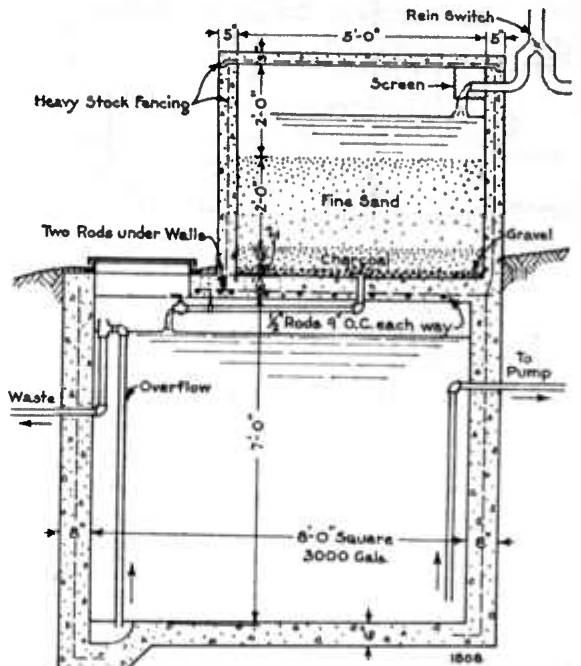
Fig. 9 from USDA Farmers' Bulletin 1448, Farmstead Water Supply (1925), p. 11. Public domain; cropped.
The bulletin also gives a quick capacity rule for a square or rectangular tank: inside length × width × height in feet, times 7½, gives gallons. A tank 6 × 4 × 4 feet holds about 720 gallons. The Texas manual says to size a cistern to see the household through the longest expected stretch without rain.
The 1925 bulletin's warning about a cistern's weaknesses still describes the risks: dust, soot and bird droppings from the roof, tastes from the tank walls, neglected cleaning, tree roots and, most serious, foul seepage from something nearby.
Making rainwater safe to drink
CDC's position is that rainwater can carry germs and chemicals and should be treated before drinking, with a method that deals with what is actually in it. For everyday use, CDC suggests limiting rainwater to things you won't swallow, such as watering non-food plants and washing non-food items, and using tap or bottled water for drinking, cooking, brushing teeth, rinsing produce and watering edible plants. If you drink, cook or bathe with rainwater, CDC says to test it regularly for germs and chemicals, and to ask your health department which ones to test for.
In an emergency, CDC and FEMA both list rainwater among the outdoor sources that can be made safe by treatment. The steps:
- Let it settle and clear it. If it's cloudy, settle it and pour it through a clean cloth or coffee filter (EPA, CDC; see Fig. 2-3). The 1925 bulletin's caution about any filter applies: it removes dirt and makes water safer, but it is never a guarantee. Filtering salt water still leaves salt water.
- Filter for parasites if you have a portable filter. Chlorine doesn't kill Giardia or Cryptosporidium; the Texas manual says an absolute 1-micron filter, certified by NSF, is needed to remove them. See water filters compared.
- Disinfect. FEMA calls boiling the safest method; chlorine doesn't kill Giardia or Cryptosporidium (TWDB), which is why the filter step matters if you use bleach. The doses, times and altitude rule are in how to purify water.
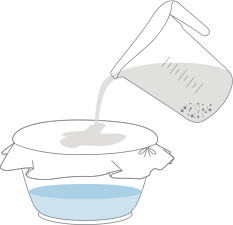
From U.S. Environmental Protection Agency, Emergency Disinfection of Drinking Water (EPA 816-F-15-003, 2017), p. 2. Public domain; cropped.
Chlorinating a whole tank. The Texas manual says chlorine must reach 1 part per million to disinfect, and that for laundry bleach at 6% that takes 2 fluid ounces (1/4 cup) per 1,000 gallons. It adds three drawbacks: household bleach isn't labeled by FDA for treating water, chlorine combines with decaying organic matter to form by-products called trihalomethanes, and chlorine still doesn't kill Giardia or Cryptosporidium. The manual itself presents tank chlorination as mostly of historical interest. For drinking, treat the water you draw, by the batch, as in the steps above.
Rainwater that can't be fixed
- Fuel, oil or toxic chemicals in a cistern: CDC says treatment can't make it safe; drain it completely.
- Asphalt-shingle roofs leach compounds; the Texas manual says that water is for irrigation only.
- Radioactive fallout. Kearny's 1979 civil-defense manual warns that water collected from fallout-contaminated roofs carries more fallout than runoff from the ground. Follow official instructions in a radiation emergency and use stored water.
Before and after a storm
CDC's cistern guidance for disasters:
Before:
- Fill the cistern to capacity. The extra water adds to your supply and helps weigh down a rooftop tank in high wind.
- Close or divert the catchment so floodwater and storm runoff can't get in.
- Keep stored emergency water anyway (at least 1 gallon per person per day for 3 days, two weeks if you can) and a bottle of unscented 5–9% bleach.
After:
- If a cistern of untreated rainwater with open connections (gutters, overflows) took in storm debris or floodwater, don't use it; ask the health department. CDC says disinfecting that water is unreliable, because the right chlorine dose is hard to judge and the open connections let contamination back in. Contaminated water can still be used to flush toilets.
- Cleaning a catchment cistern, if the health department says to: clear debris from the roof and gutters, empty the cistern completely, scrub the inside with a stiff brush and a solution of 1 cup of 5–9% bleach in 10 gallons of water if it is safe to do so, rinse, drain and refill with clean water.
For the storm itself, see hurricanes and floods.
Rain catchment system
- State rules checked: barrel limits, registration, permitted uses
- Roof suitable for the use (no asphalt shingles for drinking water), gutters free of lead solder
- Leaf guards or downspout screens, cleaned after storms
- First-flush diverter sized at 10 gallons or more per 1,000 sq ft of roof, emptied after each rain
- Opaque, covered tanks that never held chemicals, vents and inlets screened
- Barrels emptied at least every 10 days if not screened (CDC)
- Tanks on a level pad that can take 8+ pounds per gallon
- Overflow routed away from foundations and septic drainfields
- No connection to the house's drinking-water pipes
- Labels: "Rainwater, not for drinking untreated"
- Treatment for drinking water on hand: filter, bleach, a pot for boiling
- Cistern cleaning supplies: stiff brush, bleach, eye protection
Where to go next
Rain is one source among several: start with how to store water and the water already in your house. For treatment, see how to purify water and water filters compared. If your house also has a private well, see wells and well shock.
Sources
- CDC — Collecting Rainwater and Your Health: An Overview
- CDC — Cistern Safety and Disasters: Before, During, and After
- CDC — How to Find Clean Water in an Emergency
- Texas Water Development Board — The Texas Manual on Rainwater Harvesting, 3rd ed. (2005)
- USDA — Farmers' Bulletin 1448, Farmstead Water Supply (1925)
- EPA — Emergency Disinfection of Drinking Water (EPA 816-F-15-003, 2017)
- FEMA — Food and Water in an Emergency (FEMA 477, 2004)
- Cresson H. Kearny — Nuclear War Survival Skills (ORNL-5037, 1979)
- U.S. Department of Energy, FEMP — Alternative Water Supply Tool
- NCSL — Map Monday: Is Catching Rainwater Legal in Your State? (updated September 8, 2025)
- Colorado State University Extension — Rainwater Collection in Colorado (2025)
- Utah Division of Water Rights — Rainwater Harvesting Registration
2.7 · Chapter 2, Water
Private wells in an emergency: power, flooding, shock chlorination and testing
A well owner is their own water utility. When the power fails the pump stops, and when a flood reaches the wellhead the water can't be trusted until it has been disinfected and tested. Here is what to do, in what order, and why.
On city water, someone else tests the supply, treats it and warns you when it goes wrong. On a private well, nobody does. CDC says plainly that EPA's rules for public water systems don't apply to private wells, and that no government agency regulates, treats or checks the water from a private well. The owner is the utility.
That shows up in an emergency in two ways. When the power goes out, the pump stops, and with it every tap, toilet and shower in the house. And when floodwater reaches the well, the water can carry sewage, farm runoff and chemicals into the ground the well draws from, and it stays unsafe until the well has been disinfected and the water tested.
This page covers both, plus the routine testing that tells you whether the well was safe to begin with.
Before anything goes wrong
Know your well
Two numbers decide how much bleach a well needs and whether a hand pump could reach the water: the casing diameter and the depth of water in the well. Virginia Cooperative Extension explains how to find them:
- A well completion report (in Virginia, on file for wells built after 1992) or the driller's records give the total depth and the static water level, the distance from the top of the well down to the water.
- Depth of water = total depth − static water level. Its example: a 130-foot well with water 30 feet down holds 100 feet of water.
- If there are no records, it recommends having a licensed well driller take the measurements.
Also know what kind of well you have. CDC's procedures differ for drilled or driven wells and bored or dug wells. CDC notes that many bored and dug wells are shallow and have no lining, casing or grouting, so contamination can get in from the surface.
Keep the wellhead tight
EPA's checklist for well owners:
- Slope the ground so runoff drains away from the well.
- Fit a well cap or sanitary seal, and inspect it, the casing and the surface seals for cracks, corrosion and settling.
- Don't cut the casing off below ground level.
- Keep pesticides, fertilizers, fuel and degreasers away from the well, check fuel tanks, and never pour harsh chemicals into a septic system.
- Keep maintenance records, and use a certified driller for new wells, changes and closing old ones.
The reason is the oldest lesson in well water. The 1925 USDA bulletin Farmstead Water Supply records a 1916 case in Virginia: heavy rain backed up a house sewer, the water reached the pit at the top of a drilled well and ran down the outside of the casing, and within two weeks five of the family's eight children had typhoid fever; the eldest died. The bulletin's point: wells are polluted through an open or loose top and by foul drainage underground (see Fig. 2-4), so a deep well is only as safe as its top.
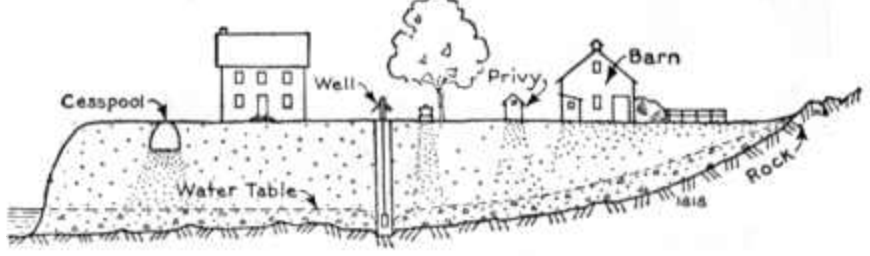
Fig. 4 (upper drawing) from USDA Farmers' Bulletin 1448, Farmstead Water Supply (1925), p. 5. Public domain; cropped.
When the power goes out
An electric well pump is just another motor on the house's circuits. No power, no water.
How much generator it takes. EWEB's generator sizing guide lists a 1/3-horsepower well pump at 1,000 running watts and 2,000 additional starting watts. Many pumps are larger, so check the pump's own rating. Starting watts matter most here, because a motor needs a short surge to start. Work through the method in what size generator you need.
How to connect it. If your pump is wired into the breaker panel rather than plugged into an outlet, running it from a generator takes a transfer switch or interlock installed by an electrician; see transfer switches and interlock kits.
Generators kill two ways
- Carbon monoxide from a generator run too close to the house: placement and alarms are in generator safety.
- Backfeeding the house wiring through an outlet instead of a transfer switch or interlock: why it can electrocute line workers is in transfer switches.
Fill containers while you have power. Our suggestion: with an outage forecast, fill water containers and the bathtub while the pump still runs. Finding water at home covers the water left in the pipes and water heater once it stops.
Hand pumps and the suction limit
A hand pump on the surface works by suction, and suction has a hard ceiling. The 1925 bulletin explains: even a perfect vacuum at sea level lifts water only 33.9 feet, and in its test an ordinary pitcher pump delivered 10.3 gallons a minute at low lift and nothing at all at 30 feet 2 inches. It took the safe working limit as 65% of the theoretical figure, and the limit drops as you go higher:
| Elevation | Theoretical lift (atmospheric pressure as feet of water) | Working suction limit |
|---|---|---|
| Sea level | 33.9 ft | 22.0 ft |
| 2,000 ft | 31.4 ft | 20.4 ft |
| 4,000 ft | 29.1 ft | 18.9 ft |
| 6,000 ft | 27.0 ft | 17.6 ft |
| 8,000 ft | 25.0 ft | 16.2 ft |
From Table 6 of Farmers' Bulletin 1448 (1925), which also gives the odd-thousand elevations. Lift is the vertical distance from the water level to the top of the pump cylinder.
So a surface hand pump only suits wells whose water stands within about 20 feet of the pump near sea level, and less at altitude. For deeper water, the bulletin describes pumps whose cylinder is lowered into the well, in or close to the water, and worked by a rod from the surface, so the pump no longer depends on suction.
A well bucket is the last resort. Kearny's 1979 civil-defense manual describes a bail-can: a can at least an inch narrower than the casing, with a loose flap valve in the bottom that opens as it sinks and closes as it's pulled up on a rope (see Fig. 2-5). He notes the catch: the pump and pipes in the well have to be removed first. Our suggestion: pulling a pump is work for a pump contractor, so ask one about it before you need it rather than during a crisis.
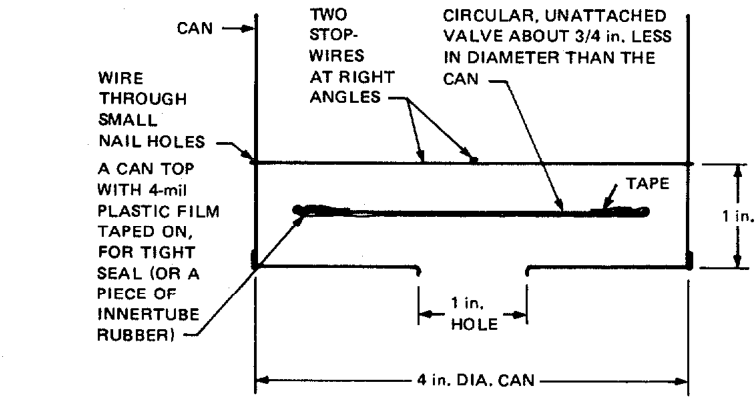
Fig. 8.10 from Cresson H. Kearny, Nuclear War Survival Skills, ORNL-5037 (Oak Ridge National Laboratory, 1979), p. 61. Treated as public domain: a government-funded report with no copyright claim (the 2003 preface is not used). Cropped.
When floodwater reaches the well
A flooded well: shock, gas and germs
- Don't turn on the pump. EPA warns of electric shock and damage to the well and pump, and says to stay away from the pump while it is flooded.
- Rubber boots and gloves are not enough protection from shock, says EPA. Don't touch flooded electrical equipment; have a qualified electrician, well contractor or pump contractor check the wiring before power is restored (EPA, CDC). Turn off the power to the well before clearing debris (CDC). If someone is shocked, call 911; see CPR and AEDs.
- Don't go into a well pit. CDC says gases and vapors can build up there.
- Don't drink or wash with the water. EPA says people who drink or wash with water from a flooded well risk getting sick.
- Fuel or chemical smell: CDC says boiling and disinfection won't make it safe. Use bottled water and call the health department.
Assume it's contaminated. EPA's 2005 flood sheet says wells more than 10 years old or less than 50 feet deep are likely to be contaminated even with no visible damage. Floodwater can loosen hardware and distort the casing, sediment can wear out the pump, and some wells collapse. If the cap wasn't tight, floodwater went straight in.
Who should do the work. CDC and EPA both say a flooded well is best disinfected by a well or pump contractor, and to contact your local or state health department or agricultural extension agent for advice first. The steps below are what those agencies describe, so you can follow the work or do it yourself if you must.
Until the water is tested, CDC says to drink bottled water, or boil well water at a rolling boil for 1 minute. EPA warns that after a wide flood a well may stay unsafe for many months, because septic waste and chemicals keep moving through the ground, so plan on repeated testing.
Shock chlorination: disinfecting the well
Shock chlorination means pouring a strong chlorine solution down the well and running it through every pipe and fixture, then letting it stand long enough to kill what's living in the system. Virginia Cooperative Extension says it is required after a new well is built and recommended after a positive coliform test, after any repair or maintenance, after flooding, or when there's another obvious source of contamination nearby.
It kills bacteria in the system. It doesn't fix the cause. Virginia Extension notes that if a failing septic system, a loose cap or a cracked casing keeps letting contamination in, the problem will return. It also says a capable do-it-yourselfer can do the job but that it can be challenging, and suggests considering a licensed well driller. And EPA says it doesn't remove pesticides, heavy metals or other chemicals.
Before you start
- Store 12 to 24 hours of other water for drinking and cooking; you can't use the well water during treatment (Virginia Extension).
- Bypass water softeners and treatment units. CDC says chlorine can damage softeners; Virginia Extension adds pressure tanks, filters and filter media. Check each maker's instructions.
- Protect yourself. Goggles, rubber gloves, boots, an apron and a ventilated area (Virginia Extension, CDC).
- Use plain, unscented liquid bleach. CDC says most is 5–9% sodium hypochlorite.
The steps (CDC, drilled or driven well)
- Turn off the power to the well and clear debris from the wellhead. Have the electrical system and pump repaired first if needed.
- Once the wiring and pump are safe to run, run the pump until the water is clear, through the outside faucet nearest the well, which keeps the dirty water out of the house plumbing. Without a pump, bail by hand.
- Close the valves to any water softener.
- Look up the bleach amount for your casing and water depth (table below).
- Mix the bleach with 3 to 5 gallons of water in a 5-gallon bucket.
- Remove the vent cap and pour the mixture in through a funnel, keeping it off electrical connections.
- Circulate it: run a hose from an outside faucet back into the well, and rinse the inside of the casing for 5 to 10 minutes. Virginia Extension says about 15 minutes, until the hose smells strongly of chlorine, and notes that only surfaces the chlorine touches are disinfected.
- Open every indoor faucet until you smell strong chlorine, then close them. Virginia Extension adds hot and cold taps, outside faucets and flushing each toilet.
- Let it stand at least 12 hours. Don't use any water during this time.
- Drain it outdoors onto an area without plants, such as a driveway, and away from streams and ponds, until the chlorine smell is gone. If you have a septic system, Virginia Extension says to limit how much of the chlorinated water goes into it by flushing through the outdoor faucets.
- Run the indoor faucets until the chlorine smell disappears.
- Boil or use other water until a test comes back clean.
Virginia Extension notes that chlorine is hard to flush out of a water heater, and suggests draining it; turn off its power or gas first so the heater isn't damaged (see water at home).
For bored or dug wells, CDC's steps are similar, but the mixture is poured straight into the well rather than through a vent with a funnel, and the amounts are much larger: CDC's separate table runs from half a cup for a 6-inch-wide well with 10 feet of water to over 13 gallons for a 5-foot-wide well with 50 feet.
How much bleach: the sources disagree
This is where official sources differ the most, and it's worth knowing why.
Bleach for a drilled or driven well (CDC, approximate)
| Depth of water | 4-inch casing | 6-inch casing | 8-inch casing |
|---|---|---|---|
| 10 ft | 3 1/4 tbsp | 1/2 cup | 3/4 cup |
| 20 ft | 6 1/2 tbsp | 1 cup | 1 1/2 cups |
| 50 ft | 1 cup | 2 1/2 cups | 3 3/4 cups |
| 100 ft | 2 cups | 5 cups | 7 1/2 cups |
CDC's table covers casings from 2 to 36 inches and depths to 100 feet, and is for unscented 5–9% bleach. Use the full table on CDC's page for other sizes.
Virginia Cooperative Extension's table, for 5.25% bleach, calls for far more: for a 6-inch well with 100 feet of water, 4 quarts (16 cups), against CDC's 5 cups. The difference is in what each is aiming for. CDC's amounts are calculated to reach more than 100 mg/L of chlorine (about 100 parts per million) in the well. Virginia's table is built to reach about 200 parts per million and adds enough to treat 110 gallons of household plumbing (pressure tank, water heater, pipes) on top of the well itself. EPA's 2005 flood sheet is simpler still: one gallon of unscented bleach poured into the well, whatever its size.
Contact time differs too: at least 12 hours (CDC), 12 to 24 hours (Virginia Extension), 6 to 24 hours (EPA, 2005).
What to do with that: if a contractor or your health department gives you a figure, use it. CDC's table is the current federal guidance and the one printed here; Virginia's larger amounts aim at a stronger solution and include the house plumbing. Every source agrees on the check that matters: every faucet should smell strongly of chlorine before you let it stand. If one doesn't, Virginia Extension says to add more solution to the well.
A note on old advice
The 1925 bulletin advised against chemical disinfection of wells unless done under technical direction, and its chemical was chloride of lime (bleaching powder), where today's guidance uses household liquid bleach. Its reasoning still holds: the dose depends on the well's volume and the water's chemistry, and the effect fades as fresh water flows in. That is why modern sources also recommend a contractor, and why every procedure ends with a test.
Testing
After shock chlorination or a flood
- Wait until the chlorine is gone, and at least 7 to 10 days after disinfecting, before sampling (CDC; EPA 2005). Virginia Extension says one to two weeks.
- Test for total coliform and either E. coli or fecal coliform bacteria (CDC).
- If the results are clean: CDC says to retest in 2 to 4 weeks, again in 3 to 4 months, and after that at least twice a year, or more often if the water changes.
- If coliform bacteria are found: disinfect again and retest; if they persist, contact the health department (CDC). Virginia Extension says continuous disinfection may be needed.
Every year, emergency or not
CDC and EPA both say to test a private well at least once a year for:
| Test | Why |
|---|---|
| Total coliform bacteria | A sign that surface water or waste is getting in |
| Nitrates | CDC says every well owner should test for them yearly |
| Total dissolved solids | General water quality |
| pH | How acidic or alkaline the water is |
Ask your health or environmental department what else to test for where you live. CDC names lead, arsenic, mercury, radium, pesticides and volatile organic compounds as ones to ask about.
Test more often (CDC, EPA) if: there are reports of well problems in your area; flooding, construction or nearby waste sites affect the well; you repair or replace part of the system; the water's taste, color or smell changes; someone in the household becomes pregnant; or a child, elderly person or nursing mother lives in the home. CDC also suggests checking the well for mechanical problems every spring.
Use a state-certified laboratory. CDC says health departments can often test for coliform bacteria, nitrates and pH and can list certified labs. If results are bad, use bottled water and ask the health department what to do. EPA's Safe Drinking Water Hotline is 800-426-4791.
Well emergency kit
- Well records: type, casing diameter, total depth, static water level, depth of water
- Name and number of a well or pump contractor and the county health department
- Generator sized for the pump's starting watts, with a transfer switch or interlock installed
- Water containers to fill while the pump still runs, and 12 to 24 hours of stored water for shock treatment
- 1 to 2 gallons of plain unscented bleach (5–9%)
- A 5-gallon bucket, a funnel and a garden hose that reaches the wellhead
- Goggles, rubber gloves and boots, old clothes
- Instructions for bypassing the water softener and any filters
- A sterile sample bottle or a certified lab's sampling instructions
- A printed copy of the CDC bleach table for your casing size
Where to go next
Until the well is tested, the house runs on stored and treated water: see how to store water, how to purify water and the water left in your house. For a second outside source, see rain catchment. For the flood itself, see floods, and for running the pump, generator size and generator safety.
Sources
- CDC — How to Disinfect Wells After an Emergency
- CDC — Guidelines for Testing Well Water
- CDC — How to Find Clean Water in an Emergency
- EPA — What to Do After the Flood (EPA 816-F-05-021, 2005, updated October 2024)
- EPA — Protect Your Home's Water
- EPA — Emergency Disinfection of Drinking Water (EPA 816-F-15-003, 2017)
- Virginia Cooperative Extension — Shock Chlorination: Disinfecting Private Household Water Supply Systems (BSE-257P, 2025)
- EWEB (Eugene Water & Electric Board) — Generator Sizing Considerations
- USDA — Farmers' Bulletin 1448, Farmstead Water Supply (1925)
- Cresson H. Kearny — Nuclear War Survival Skills (ORNL-5037, 1979)
Terms used in this chapter
- absolute pore size
- A rating meant to be a filter's largest pore, unlike a nominal rating, which only says a share of particles was caught in a test. CDC's pore-size guidance is written in absolute terms.
- backfeeding
- Sending generator power into house wiring through a wall or dryer outlet with no transfer switch. It can electrocute utility workers and neighbors on the same transformer and is illegal in many places.
- boil-water notice
- An official notice that tap water should be boiled before use. Follow it: bring clear water to a rolling boil for 1 minute, or 3 minutes at high altitude. Boiling kills all three kinds of germs.
- bug-out bag
- A packed evacuation bag, one per person, light enough to carry on foot or on public transit. Ready.gov calls it a go-bag. If you leave by car, bring the home kit along with it.
- calcium hypochlorite
- A granular chlorine sold for pools, which EPA calls a very powerful oxidant. Its method dissolves a heaping teaspoon in two gallons as a stock solution, then uses one part of that per 100 parts water.
- carbon monoxide
- A poison gas in generator exhaust that you can't see or smell. The CPSC says a generator in an enclosed space can produce deadly levels within minutes, and the gas can linger for hours.
- chlorine dioxide
- A water disinfectant sold as tablets. It is the only chemical option CDC credits against Cryptosporidium, but it needs several hours of contact time and leaves no lasting protection.
- Cryptosporidium
- A protozoan parasite with oocysts 4–6 microns across. Boiling kills it, chlorine and iodine work poorly on it, chlorine dioxide is somewhat effective, and a filter of 1 micron or smaller removes it.
- distillation
- Boiling water and collecting the steam as it condenses. Ready.gov and FEMA say it removes germs, heavy metals, salts and most other chemicals; it takes 20 minutes of boiling to collect a cup.
- fallout
- Radioactive material that settles like dust on the outside of buildings, so CDC says the safest shelter is the spot farthest from the walls and roof, such as a basement or the middle of the building.
- first-flush diverter
- A device that sends the first, dirtiest rain off a roof somewhere other than storage. The Texas manual's rule of thumb is to divert at least 10 gallons per 1,000 square feet of roof.
- food-grade
- Made for holding food or drinking water. CDC recommends FDA-approved food-grade water storage containers and suggests asking the manufacturer if you aren't sure a container qualifies.
- interlock kit
- A metal bracket on the main panel that blocks the main breaker while a generator feeds the panel through its own breaker. Consumer Reports' 2021 estimate: $50–$150 for the kit plus $400–$800 labor.
- micron
- A thousandth of a millimeter, the unit for filter pore sizes. CDC says a pore size of 1 micron or smaller removes parasites and 0.3 micron or smaller also removes bacteria.
- NSF/ANSI 53
- An NSF standard for filters' health-related claims, with more than 50 possible, such as lead and Cryptosporidium. A certified product is certified only for the contaminants listed for it.
- protozoa
- The largest waterborne germs, such as Giardia and Cryptosporidium. They are the hardest to kill with chlorine or iodine but the easiest to strain out: a filter of 1 micron absolute or smaller removes them.
- purifier
- A water treatment unit that removes viruses too. To claim EPA's purifier designation, a maker must show removal of 99.9999% of bacteria, 99.99% of viruses and 99.9% of cysts; EPA doesn't test it.
- reverse osmosis
- A treatment method CDC credits with removing protozoa, bacteria and viruses, and one of the two methods the sources credit with removing dissolved salt. NSF/ANSI 58 covers these systems.
- running watts
- The steady power an appliance draws once it is going, or the most a generator can supply for an extended period. A generator's running watts must cover everything that will be on at once.
- shock chlorination
- Disinfecting a well by pouring a strong chlorine solution down it, running it through every pipe and fixture, and letting it stand. It kills bacteria in the system but doesn't fix the cause.
- sodium hypochlorite
- The active ingredient in household chlorine bleach. For disinfecting drinking water, EPA says to use regular unscented bleach with 6% or 8.25% sodium hypochlorite, less than a year old.
- starting watts
- The short burst of extra power a motor needs to start, usually lasting two to three seconds. To size a generator, add the single largest starting surge to the total running watts.
- static water level
- The distance from the top of a well down to the water. Subtracted from the well's total depth, it gives the depth of water; the driller's records or a well completion report give both.
- total coliform
- A bacteria test that signals surface water or waste getting into a well. CDC and EPA say to test a private well for it at least once a year, and again after a flood or disinfection.
- transfer switch
- A small panel, installed by an electrician usually next to the main panel, that feeds chosen circuits from the utility or the generator, never both at once. Consumer Reports' 2021 cost: $500–$1,500 installed.