The Minuteman Almanac
Field Manual
Chapter 10
Kits & Bug-Out
The 72-hour kit, bug-out and get-home bags, car kits, documents, and when and how to leave.
Edition of November 3, 2026 · 4 articles
This manual is rebuilt whenever the chapter changes; the current edition is always at minutemanalmanac.com/print/bug-out/. It is for planning and learning, not medical, legal or electrical advice. In an emergency, follow official instructions.
Contents
- 10.1The 72-hour kit: what goes in it, why, and how much for a family of four
- 10.2The bug-out bag: an evacuation bag you can actually carry
- 10.3The get-home bag: getting back from work or school when roads and transit fail
- 10.4The car kit: what to keep in the vehicle by season, and what to do if you're stranded
10.1 · Chapter 10, Kits & Bug-Out
The 72-hour kit: what goes in it, why, and how much for a family of four
The first few days after a disaster are the ones you may have to face on your own. Here is the federal kit list, what each item is for, and how much a household of four needs.
A basic emergency kit is the first thing to put together, before any long-term storage and before any specialized gear. It is the box (or bin, or bag) that lets your household get through the first few days of an emergency at home, or grab and go if you have to leave.
It is usually called a 72-hour kit. Ready.gov, FEMA's preparedness site, now asks for "several days" of food and water rather than naming a number, and the CDC sets three days of water as the minimum, with two weeks if you can manage it. Three days is the floor, not the goal. Once the kit is built, the next step is to store more water and deepen the pantry, as the Start Here guide lays out.
The basic kit, item by item
Ready.gov's list has two parts: a basic kit, and additional items to add for your household's needs. Here is the basic kit, with the reason each item is there.
Water: one gallon per person per day. This covers drinking and basic sanitation. Ready.gov notes that a normally active person needs about three-quarters of a gallon of fluid a day, from water and other beverages, and that children, nursing mothers, sick people and anyone in a hot climate need more; very hot weather can double it. Water is the heaviest and bulkiest part of any kit, and the part people most often skimp on.
Food: at least several days of non-perishable food. Choose food that needs no refrigeration, little or no water, and little or no cooking, because the power and the water may both be off. Ready.gov suggests canned meats, fruits and vegetables, protein or fruit bars, dry cereal or granola, peanut butter, dried fruit, canned juice, shelf-stable milk, and comfort foods. Pick what your family will actually eat.
A battery-powered or hand-crank radio, and a NOAA Weather Radio with tone alert. When cell towers and internet are down or overloaded, broadcast radio still reaches you. A weather radio with tone alert can wake you for a warning in the night. See NOAA weather radio.
Flashlight. For finding your way through a dark house and checking for damage.
First aid kit. For the cuts, burns and sprains that come with cleanup, when an urgent care may be closed.
Extra batteries. For the flashlight and radio, in the sizes they take.
Whistle. To signal for help if you are trapped or hurt and can't shout for long.
Dust mask. To help filter contaminated air, such as dust after a collapse or smoke.
Plastic sheeting, scissors and duct tape. To shelter in place, sealing a room if officials tell you to, or to patch a broken window or roof.
Moist towelettes, garbage bags and plastic ties. For personal sanitation when the water is off and toilets can't be flushed.
Wrench or pliers. To turn off utilities if officials tell you to or if a line is damaged.
Manual can opener. Canned food is useless without one, and electric openers won't work.
Local maps. Paper maps work without a signal or a charged phone, and you may need a route you don't normally drive.
Cell phone with chargers and a backup battery. Your phone is your alert system, your contact list and your map. A charged power bank keeps it going. For larger loads, see portable power stations.
The additional items
Ready.gov's second list fills in what a household needs beyond the basics.
- Soap, hand sanitizer and disinfecting wipes, for clean hands and surfaces when water for washing is scarce.
- Prescription medications, because a pharmacy may be closed or unreachable for days.
- Non-prescription medications: pain relievers, anti-diarrhea medication, antacids and laxatives.
- Prescription glasses and contact lens solution.
- Infant formula, bottles, diapers, wipes and diaper rash cream, if you have a baby.
- Pet food and extra water for each animal (more on pets below).
- Cash or traveler's checks. Ready.gov's financial page explains why: ATMs and card readers may not work in a disaster. It suggests keeping a small amount of cash at home in a safe place, in small bills.
- Important family documents: copies of insurance policies, identification and bank records, kept electronically or in a sealed, water-resistant container.
- A sleeping bag or warm blanket for each person.
- A complete change of clothing for each person, suited to your climate, and sturdy shoes.
- A fire extinguisher.
- Matches in a waterproof container.
- Feminine supplies and personal hygiene items.
- Mess kits, paper cups, plates, paper towels and plastic utensils, so you aren't washing dishes with scarce water.
- Paper and pencil, for notes, messages and lists when the phone is dead.
- Books, games, puzzles or other activities for children, because a calm child makes the whole household calmer.
How much for a family of four
The quantities below are for four people for three days. Figures marked suggested are the Almanac's own planning numbers where Ready.gov names an item without a quantity.
| Item | For four people, three days | Basis |
|---|---|---|
| Water | 12 gallons (about 100 lb) | 1 gallon per person per day (Ready.gov, CDC); 8.33 lb per gallon (USGS) |
| Water, two-week goal | 56 gallons | CDC: two weeks if possible |
| Food | About 24,000 calories, as 36 no-cook meals plus snacks | 2,000-calorie reference day (Dietary Guidelines); adults may need 1,600–3,000, young children less |
| Sleeping bags or warm blankets | 4 | One per person (Ready.gov) |
| Change of clothing and sturdy shoes | 4 sets | One per person (Ready.gov) |
| Flashlights | 2 to 4 | Suggested: one per adult at least, so no one is left in the dark when the group splits up |
| Batteries | A full spare set for every flashlight and radio | Suggested: enough to replace each device's batteries once |
| Prescription medications | At least a 3-day supply for each person who takes them | Suggested: to match the length of the kit; more is better |
| Radio | 1 battery or crank radio, plus a NOAA weather radio (one unit may do both) | Ready.gov |
| First aid kit, whistle, can opener, wrench, maps, tape and sheeting | 1 of each | Ready.gov |
| Whistles | 4 | Suggested: one per person, since a whistle only helps the person carrying it |
| Mess kits or plates, cups and utensils | 4 settings for 3 days | Ready.gov lists them; one setting per person per meal if disposable |
| Pet supplies | Several days of food and water per pet | Ready.gov |
Water weight is why the home kit is usually a bin, not a backpack. For what to carry when you leave on foot, see the bug-out bag.
On children's calories: the 2020–2025 Dietary Guidelines estimated 1,000 to 2,000 calories a day for children aged 2 through 8, and 1,400 to 3,200 for older children and teenagers. A family with two young children needs less than 24,000 calories for three days; packing a little extra food costs little and covers a longer outage.
The 72-hour kit (Ready.gov basic and additional lists)
- Water: one gallon per person per day, at least three days
- Non-perishable food for at least three days, that needs no cooking
- Battery or hand-crank radio, and a NOAA weather radio with tone alert
- Flashlights
- First aid kit
- Extra batteries
- Whistle
- Dust masks
- Plastic sheeting, scissors and duct tape
- Moist towelettes, garbage bags and plastic ties
- Wrench or pliers for the utilities
- Manual can opener
- Local paper maps
- Cell phone chargers and a charged backup battery
- Soap, hand sanitizer and disinfecting wipes
- Prescription medications
- Pain relievers, anti-diarrhea medication, antacids, laxatives
- Prescription glasses and contact lens solution
- Infant formula, bottles, diapers, wipes, diaper rash cream
- Pet food and extra water
- Cash in small bills
- Copies of ID, insurance and bank records in a water-resistant pouch
- Sleeping bag or warm blanket for each person
- Change of clothes and sturdy shoes for each person
- Fire extinguisher
- Matches in a waterproof container
- Feminine supplies and personal hygiene items
- Mess kits, cups, plates, paper towels, plastic utensils
- Paper and pencil
- Books, games or puzzles for children
- A printed copy of your household plan and contact list
Pets
Ready.gov recommends a kit for each animal: several days of food in an airtight, waterproof container; water and a bowl; extra medicine; a pet first aid kit; a collar, ID tag and leash, with backups; a crate or carrier; litter, bags and cleaning supplies; copies of registration records; and a photo of you with your pet, to prove ownership if you are separated. It suggests two kits, a larger one for staying home and a light one for evacuating.
Keeping the kit ready
A kit that was complete three years ago may not be complete today. Food expires, batteries drain, children grow out of the spare clothes, and prescriptions change.
- Water: Ready.gov and the CDC both say to replace water you bottled yourself every six months. Keep store-bought water sealed in its original container and use it by its expiration date.
- Food: Store canned food in a cool, dry place and boxed food in tightly closed plastic or metal containers, as Ready.gov advises. Replace anything that has expired.
- Once a year, Ready.gov says to reassess your kit as your family's needs change. A fixed date helps, such as a birthday or the start of your area's storm season.
- Write the dates on the outside. Label the bin with the earliest expiration date inside, so a glance tells you when it needs attention.
- Check what spoils silently: batteries, medications, infant formula and sizes of clothing and diapers.
Where to keep it
Ready.gov's advice is to keep the home kit in one designated place that everyone in the household knows, where it can be grabbed quickly if you have to leave. Because you may not be home when disaster strikes, it also recommends kits in two more places.
| Kit | What Ready.gov says | What goes in it |
|---|---|---|
| Home | One designated spot everyone knows, quick to grab | The full list above |
| Work | Be ready to shelter at work for at least 24 hours | A grab-and-go case with food, water, medications and comfortable walking shoes |
| Car | In case you are stranded | Jumper cables, flares or a reflective triangle, ice scraper, car phone charger, blanket, map, and cat litter or sand for traction (Ready.gov's car list); suggested: water and snacks too |
Ready.gov's car page says to keep the gas tank full ahead of evacuations and power outages; its evacuation page adds to keep it at least half full at all times.
Where to go next
The 72-hour kit is the first stage. From here, build toward two weeks of stored water, learn how to make water safe, and know what to keep and throw out when the power fails. If you may have to leave, see the bug-out bag.
Sources
- Ready.gov — Build a Kit
- Ready.gov — Water
- Ready.gov — Food
- Ready.gov — Car Safety
- Ready.gov — Evacuation
- Ready.gov — Financial Preparedness
- Ready.gov — Pets and Animals
- CDC — Creating and Storing an Emergency Water Supply
- Dietary Guidelines for Americans, 2025–2030
- Dietary Guidelines for Americans, 2020–2025 (estimated calorie needs)
- USGS Water Science School — Facts About Water
10.2 · Chapter 10, Kits & Bug-Out
The bug-out bag: an evacuation bag you can actually carry
A bug-out bag is the part of your emergency kit you can carry out the door in a minute. It works best when it is modest in weight and backed by a plan for where you are going.
A bug-out bag is an evacuation bag: a packed bag, one per person, that you can pick up and leave with when you are told to go or when staying is no longer safe. Ready.gov calls it a go-bag and asks for one you can carry on foot or on public transit.
The idea is simple, but it is easy to get wrong in two directions. Some bags are an afterthought, a backpack with a flashlight and a granola bar. Others are packed for a month in the wilderness and weigh so much that no one in the house can carry them for more than a few blocks. The useful bag is in between: enough to get you to a safe place and through the first few days, light enough to carry, and matched to a plan for where you are going.
Three kits, three jobs
The bug-out bag is often confused with the home kit and the get-home bag. They overlap, but each answers a different question.
| The 72-hour home kit | The bug-out bag | The get-home bag | |
|---|---|---|---|
| The question it answers | How do we get through a few days at home without power or water? | How do I leave home quickly and get to a safe place? | How do I get from work or the car back home if the roads or transit fail? |
| Where it lives | One known spot at home | By the door, one per person | At work or in the car |
| Weight limit | None to speak of: water by the gallon, a bin or tote | What you can carry on foot | What you can carry on foot, usually smaller |
| Federal guidance | Ready.gov's Build a Kit list | Ready.gov's evacuation go-bag | Ready.gov's work and car kits (shelter at work for at least 24 hours; a kit in the car in case you are stranded) |
| Full guide | The 72-hour kit | This page | The work and car kits in the 72-hour kit |
The bag doesn't replace the home kit. If you evacuate by car, Ready.gov says to bring your emergency supply kit along with the go-bag; the bag is the part you could still carry if you had to leave the car.
When to leave
Ready.gov's guidance is plain: follow the instructions of local officials, and leave early enough that you are not caught by the weather. Waiting until the wind or water arrives makes every road slower and more dangerous.
What you can do in advance:
- Know your zone and your routes. Look up your state's and county's evacuation zones and routes on the emergency management website, and check FEMA's National Risk Index for the hazards where you live.
- Sign up for alerts from local emergency management and the National Weather Service, and get the FEMA app, which shows alerts and open shelters. A NOAA weather radio works when phones don't.
- Choose several destinations in different directions, such as a friend's home in another town or a motel, so one closed road doesn't leave you with nowhere to go. Confirm which public shelters are open this year.
- Make a household communication plan: a meeting place and an out-of-state contact everyone can call. See the household radio plan for when phones are down.
- Plan for pets. Ready.gov cautions that only service animals may be allowed in public shelters, so find a pet-friendly place in advance.
- Arrange a ride with family, friends or local emergency management if you don't have a car.
On the road
- Keep at least half a tank of gas at all times, and fill up when an evacuation looks likely. Gas stations may close or lose power.
- Take one car per household to reduce traffic, and keep an emergency kit in it.
- Use the recommended evacuation routes. Shortcuts may be blocked.
- Watch for washed-out roads, damaged bridges and downed power lines, and never drive into floodwater.
- Be ready to go on foot. Ready.gov notes that depending on the disaster, your route may be on foot. That is the case the bag is built for.
Before you lock the door
Ready.gov's evacuation page covers the last few minutes at home. In short:
- Tell people where you're going. A note in the house with your departure time and destination, and, if there's time, a call or email to your out-of-state contact.
- Neighbors: see whether anyone nearby needs a ride.
- Electronics: pull the plugs on small appliances and electronics, but keep the refrigerator and freezer running unless flooding is a risk.
- Utilities: turn off water, gas or electricity only if the house is damaged and officials instruct you to.
- Last of all, lock up, windows as well as doors.
Downed lines, floodwater and generators
Treat every downed power line as live, stay away from it, and report it to the utility. Never drive into floodwater. When you return, run a generator only outdoors and away from the house, never inside a home or garage, and never connected to the home's wiring except through a transfer switch or interlock installed by a licensed electrician (see transfer switches and interlock kits). Carbon monoxide kills.
Weight: keep it modest
The commonest mistake with a bug-out bag is weight. Ready.gov's standard is a bag you can carry on foot or by public transit, and that is the right test: if you can't carry it for an hour, it will slow you down or be left behind.
Water is the reason weight climbs fast. The home-kit standard is a gallon per person per day, and a gallon of water weighs about 8.33 pounds, so three days of water for one person is roughly 25 pounds before anything else goes in. Add the rest of a kit and the bag gets heavy fast. That is why a bug-out bag usually carries less water than the home kit, plus a way to make more water safe: a filter, purification tablets, or a metal container to boil it in. Ready.gov's method for boiling is a rolling boil for one full minute.
You will see percentage-of-body-weight rules for packs online. This guide doesn't give one, because we didn't find an official source to back a number. Use a practical test instead:
- Pack the bag fully and wear it on a one-hour walk, including a hill or stairs.
- Notice what hurts and what you never touched, and cut accordingly.
- Pack each person's bag for that person. A child's bag should hold a change of clothes, a snack, a water bottle, a comfort item and a card with contact information; the adults carry the rest.
What goes in the bag
The checklist below is built from Ready.gov's kit and evacuation lists, adapted for a bag carried on foot. Items beyond Ready.gov's lists, such as a water filter, headlamp, rain layer, multi-tool and toilet paper, are the Almanac's suggestions for a bag carried on foot.
Water and filtration
Water you can carry for the first day, and the means to treat more. CDC and Ready.gov both set one gallon per person per day for drinking and sanitation; a carried bag will hold less, so the treatment method matters.
Food
High-calorie food that needs no cooking and no water: Ready.gov's examples include protein or fruit bars, dry cereal or granola, peanut butter and dried fruit. Pack what you will actually eat under stress.
Shelter and warmth
Ready.gov's evacuation page says to bring sturdy shoes and protective clothing, such as long pants, long sleeves and a hat. Its kit list adds a sleeping bag or warm blanket and a complete change of clothes for each person. In a carried bag, a compact sleeping bag or emergency blanket and a rain layer do the job.
First aid and medications
A first aid kit, prescription medications, the non-prescription medications on Ready.gov's list, and glasses or contact lens supplies.
Light and fire
A flashlight or headlamp with spare batteries, and matches in a waterproof container.
Navigation and communication
Paper local maps (marked with your routes and destinations), a phone with a charger and backup battery, a battery or crank radio, a whistle, and a written list of contacts in case the phone dies.
Documents and cash
Cash in small bills, because ATMs and card readers may be down. Copies of ID, insurance policies and bank records in a sealed, water-resistant pouch or stored electronically. Ready.gov's financial page also lists birth certificates, Social Security cards, medical and immunization records, and contacts for your doctor, insurer and bank.
Tools
A multi-tool or knife, duct tape, and a wrench or pliers if you may need to turn off utilities before leaving.
Hygiene and sanitation
Moist towelettes, hand sanitizer and soap, garbage bags, toilet paper, feminine supplies and a dust mask.
Special needs: children, pets and medical
Infant formula, bottles, diapers and wipes for babies; a familiar toy or game for children; pet food, water, leash, carrier and records for animals; and spare batteries or chargers for hearing aids, mobility equipment or other medical devices.
Bug-out bag (one per person)
- Water: bottles for at least the first day of travel
- Water treatment: filter or purification tablets, and a metal bottle or pot for boiling
- No-cook food for three days: bars, granola, peanut butter, dried fruit
- Sturdy, broken-in shoes; long pants, long sleeves and a hat
- One complete change of clothes, including socks
- Rain layer, and a compact sleeping bag or emergency blanket
- First aid kit
- Prescription medications, with a written list of doses and the prescribing doctor
- Pain reliever, anti-diarrhea medication, antacid
- Spare glasses or contact lens solution
- Flashlight or headlamp, with spare batteries
- Matches in a waterproof container
- Paper maps marked with routes and destinations
- Phone, charging cable and a charged backup battery
- Battery or hand-crank radio
- Whistle
- Written contact list and household plan, including the out-of-state contact
- Cash in small bills
- Copies of ID, insurance and bank records in a water-resistant pouch
- Multi-tool or knife, duct tape
- Moist towelettes, hand sanitizer, soap, toilet paper, garbage bags
- Feminine supplies and personal hygiene items
- Dust mask
- For babies: formula, bottles, diapers, wipes, diaper rash cream
- For children: a comfort item and a card with contact details
- For pets: food, water and bowl, leash and collar with ID, carrier, medications, records, a photo of you together
- For medical devices: spare batteries and chargers
Keeping it ready
- Keep it where everyone knows, and give one person the job of grabbing it, as Ready.gov suggests.
- Rotate the water and food. Replace water you bottled yourself every six months (Ready.gov, CDC) and food by its dates.
- Refresh medications and documents whenever prescriptions, IDs or policies change.
- Repack for the season. A winter bag needs warmer layers than a summer one.
- Walk with it once a year, and remove what you didn't need.
After you've left
Before heading home, check with officials both where you are and where you live, and don't return until they say the area is clear. Tell family and friends when you leave and when you arrive. Keep your devices charged, fill the tank before the trip back, and pack water and food for the drive, since outages may still be going on.
For the supplies you keep at home, see the 72-hour kit; for food that keeps for years, see long-term food storage.
Sources
10.3 · Chapter 10, Kits & Bug-Out
The get-home bag: getting back from work or school when roads and transit fail
Most of us spend the working day miles from our supplies. A get-home bag is the small kit that covers the gap: a day at your desk if you have to stay, or a long walk if you have to go.
The home kit only helps if you are home. On a weekday, many people are at work, at school or somewhere in between when an earthquake, a storm or a big outage hits. Trains stop while the tracks are inspected. Roads jam or close. Phones are busy. The question then is not "what do we have in the closet?" but "how do I get back to the closet?"
A get-home bag answers that question. It is a small bag kept at work, in a school locker or in the car, packed for one person and one job: to keep you fed, watered, lit and on your feet for a day, either sheltering where you are or walking home. It is smaller than the bug-out bag, which is built to leave home for several days, and it is not the car kit, which is built around the vehicle. The bug-out bag guide has a table comparing all three.
Why this bag exists
Ready.gov asks people to be ready to shelter at work for at least 24 hours, and to keep a grab-and-go work kit with food, water and medicines, plus comfortable walking shoes. That one line covers both halves of the problem: you may have to stay put, and you may have to walk.
The walking half is not theoretical. The Wellington Region Emergency Management Office (WREMO) in New Zealand plans on a large earthquake damaging roads and rail for a week or longer. Its modeling suggests that if the quake struck during working hours, up to 80,000 commuters could end up walking home. That planning grew out of experience: in 2013 a magnitude 6.6 earthquake near Seddon hit at 2:30 on a Friday afternoon, and many Wellington commuters could not get home by their usual transport. WREMO reports that many spent the night with friends in the city or walked, and that some finally put to use the emergency bags and spare walking shoes they had stowed at work and forgotten about.
WREMO now runs an annual "Long Walk Home" so people can practice. The 2024 walk was 30 kilometers (about 19 miles), from Wellington's stadium to Porirua, with checkpoints where walkers close to home could stop.
Stay or go? The official advice differs
Before packing, decide what the bag is for. Official guidance points in different directions, and both have good reasons.
| Agency | What it tells people at work | Its reason |
|---|---|---|
| Ready.gov (FEMA) | Be ready to shelter at work for at least 24 hours; keep food, water, medicines and walking shoes there | You may not be able to get home, or it may not be safe to try |
| Tokyo Metropolitan Government | Employees should wait inside their workplace; companies should stock three days of water and food for staff | Millions trying to walk home at once crowd streets and get in the way of rescue; in a survey after the 2011 earthquake, about half of people said they would set off home on foot immediately if a quake struck under the capital |
| WREMO, Wellington | Prepare to walk home, and practice the route | Roads and rail may be out for a week or longer, so waiting does not bring transport back |
Tokyo's numbers explain its caution. Its 2006 damage estimate put roughly 4.48 million people stranded in the capital after a magnitude 7.3 quake under northern Tokyo Bay, and after the 2011 earthquake an estimated 3.52 million were stranded. Tokyo's answer is to keep people where they are and set up support stations with water, toilets and information along the walking routes for those who do head home.
The practical takeaway: staying put for the first day is often the safer choice, especially in the first hours after an earthquake or while a storm is still passing. Pack the bag so that you can do either. It needs enough to wait through a day and night at work, and enough to walk home if waiting stops making sense. Follow what local officials and your employer or school tell you on the day.
Plan the route before you need it
Ready.gov's Commuter Emergency Plan is a one-page form for exactly this. It asks you to write down, in advance:
- Your normal route to and from work or school, and alternative routes (the form has space for two).
- Each public transit line you use, with its stops and fares.
- Other transport options: local taxi companies, commuter rail, bus lines, with their phone numbers.
- Links to local traffic and transit information. The form points to the Department of Transportation's 511 traveler information program, so you can check whether your area takes part.
It suggests keeping the plan in your wallet or another place you can reach in a disaster. Put a copy in the bag as well.
Two additions are worth making on the same sheet:
- A walking route. Transit routes and driving routes don't always make good walking routes. Trace one on a paper map that avoids bridges, underpasses and low-lying roads that flood, and mark places along the way where you could rest, find water, or wait with someone you know.
- Where you'll meet, and who picks up the children. Ready.gov's planning page asks every household to set a familiar meeting place and a way to reconnect if separated. If you might be stuck at work, decide now who collects children from school and who checks on an older relative. That belongs in your household plan, and the household radio plan covers how to keep in touch when phones don't work.
How long will the walk take?
The Army's foot-march manual, ATP 3-21.18, gives an average marching rate in daylight on roads of 4 kilometers an hour, about 2.5 miles an hour, and 2.4 kilometers an hour (about 1.5 miles an hour) cross-country. Those are soldiers' figures, for people who train for marching. Expect to be slower in work shoes, in a crowd, in the dark or with a child.
The same manual sets a rest pattern: a 15-minute halt after the first 45 minutes to adjust loads, then about 10 minutes of rest for every 50 minutes of walking. The table below is the Almanac's own arithmetic, not a table from the manual: it applies the soldiers' march rates and the 10-minutes-in-60 rest pattern to common distances, and leaves out the longer first halt. Treat it as a planning floor for a fit adult, not a promise.
| Distance home | Walking time at 2.5 mph | With rest halts (10 minutes per 50) | Cross-country at 1.5 mph, with halts |
|---|---|---|---|
| 3 miles | 1 hr 12 min | About 1 hr 25 min | About 2 hr 25 min |
| 5 miles | 2 hr | About 2 hr 25 min | About 4 hr |
| 10 miles | 4 hr | About 4 hr 50 min | About 8 hr |
| 15 miles | 6 hr | About 7 hr 10 min | About 12 hr |
| 20 miles | 8 hr | About 9 hr 35 min | About 16 hr |
| 30 miles | 12 hr | About 14 hr 25 min | About 24 hr |
If your commute is more than about 10 miles, walking home means at least half a day on foot even at a soldier's pace, and beyond about 20 miles it likely means a night on the way. That is a strong reason to have somewhere to wait, a friend's place partway or a plan to stay at work, rather than only a plan to walk.
The manual also notes that terrain changes the effort: walking in sand or swamp roughly doubles the energy cost compared with a paved road, and walking in snow without snowshoes can raise it four to six times.
What goes in the bag
The test for each item is whether it helps you either wait a day where you are or walk home. Ready.gov names the core of the work kit: food, water, medicines and comfortable walking shoes. The rest comes from Ready.gov's general kit list, scaled down to one person and one day, plus the Almanac's suggestions for a walk, marked below.
Shoes and socks first
The single item that most decides whether you get home is on your feet. Office shoes, heels and work boots that pinch are fine at a desk and miserable after three miles. Keep broken-in walking shoes in the bag or under the desk.
The Army manual's foot-care appendix explains why socks matter as much as shoes. Blisters and abrasions are the commonest injury from carrying a load on foot, and they come from friction, pressure and moisture. Its advice for preventing them:
- Wear clean, dry, well-fitting socks. A thin nylon, polyester or polypropylene liner under a thicker outer sock reduces blisters; acrylic socks help by moving sweat away from the skin.
- Change wet or damp socks as soon as you can. Pack a spare pair.
- Break in new footwear by alternating it with an old pair, and tape known hot spots before a long walk.
- Act on hot spots. A hot spot is a warm, burning, red patch that comes before a blister. Cover it with moleskin or tape at the first rest stop instead of walking on.
- At halts, loosen the laces a little over the arch if your feet swell.
The manual also describes how soldiers drain blisters. This guide stops at prevention; for a blister that breaks or a foot wound that looks infected, see wounds.
Water and food
Carry at least one full bottle and something to make more safe. Ready.gov's kit standard is about a gallon per person per day for drinking and sanitation, which is more than one person will want to carry on foot; a liter or two plus a small filter or purification tablets is the usual compromise, as in the bug-out bag. How to purify water has the methods and doses. Add food that needs no cooking, such as bars, nuts and dried fruit, enough for a day.
Light, signal and information
A flashlight or headlamp with spare batteries, because outages and night walks go together. A whistle, which Ready.gov lists for signaling for help. A paper map with your walking route marked, since your phone may be dead or without signal. A phone charging cable and a charged backup battery. A small battery or crank radio, so you can hear what officials are saying.
Health
Your prescription medications for at least a day, with a written list of what you take. A few adhesive bandages, moleskin and pain reliever; the first aid kit guide has the full home list. Hand sanitizer: CDC says to use one with at least 60% alcohol when soap and water aren't available, and notes it works less well on hands that are visibly dirty or greasy. A dust mask, which Ready.gov lists to help filter contaminated air, matters after an earthquake or a building collapse, when dust fills the air.
Clothing for the weather
A rain layer, a warm layer and a hat, chosen for the worst season you commute in. In winter, NWS advises loose, lightweight, warm layers, taking one off before you start to sweat, because sweat leads to chills. In summer, a hat and more water. See hypothermia and frostbite and heat illness for the warning signs to watch for in yourself and others.
Money and papers
Small bills, because card readers and ATMs may be down, and a copy of the Commuter Emergency Plan and your contact list on paper.
Packing it so you can carry it
Keep it light. This bag is meant for a single day, so it should be well under a bug-out bag in weight. Wear it on a lunchtime walk once and remove whatever you never touched.
ATP 3-21.18 gives two load-carrying findings that apply to any backpack:
- Heavy items high and close to your back. The manual says packing the heavier items higher and closer to the body can cut the energy cost of walking by as much as 25 percent compared with the same items low and away from the body (Fig. 10-1). Water bottles and food go against the back panel, not in an outside pocket.
- Use the hip belt. With a properly fitting hip belt, pressure on the shoulders drops considerably compared with the same pack without one.
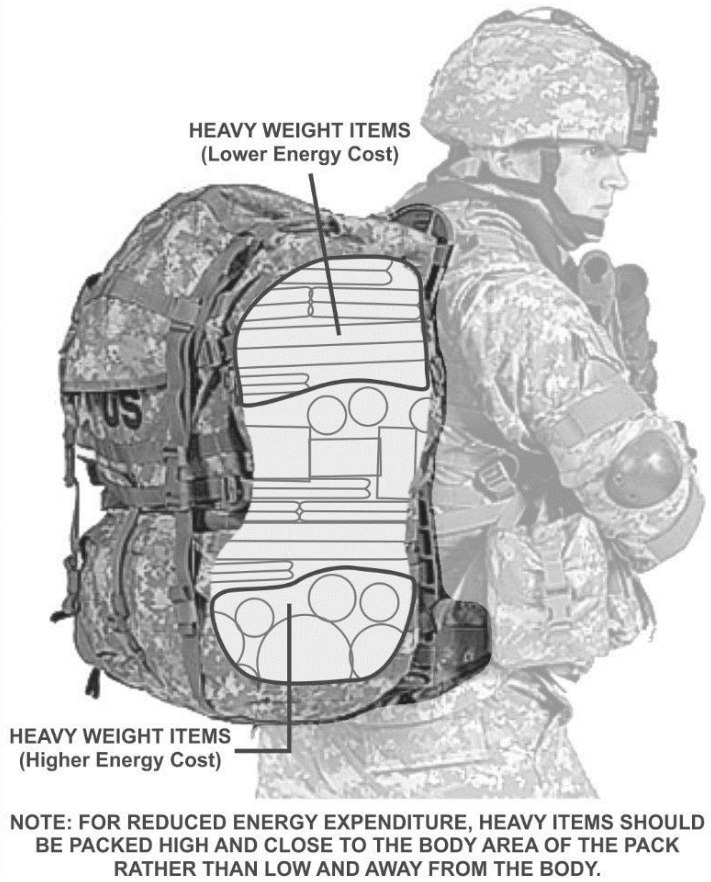
Fig. C-2 from U.S. Army ATP 3-21.18, Foot Marches (April 2017), p. C-3. Public domain; cropped. Not endorsed by the U.S. Army or Department of Defense.
A plain daypack with a waist strap is enough. A bright or reflective item on the outside helps drivers see you if you end up walking at dusk.
Get-home bag (one per person, kept at work, school or in the car)
- Broken-in walking shoes, if you don't wear them every day
- Two pairs of socks, with thin liner socks
- Moleskin or tape for hot spots, a few adhesive bandages
- One to two liters of water in bottles
- A small water filter or purification tablets
- Food for a day that needs no cooking
- Prescription medications for at least a day, and a written list
- Pain reliever
- Hand sanitizer with at least 60% alcohol
- Dust mask
- Flashlight or headlamp, with spare batteries
- Whistle
- Paper map with your walking route and alternates marked
- Printed Commuter Emergency Plan and contact list
- Phone charging cable and a charged backup battery
- Small battery or crank radio
- Rain layer, warm layer and hat for the season
- Cash in small bills
- Reflective band or vest for walking near traffic (suggested)
On the walk
- Tell someone you're leaving, your route and when you expect to arrive. Phone alerts covers texting versus calling when networks are busy.
- Stay off flooded roads and paths. The National Weather Service says six inches of fast-moving floodwater can knock an adult off their feet, and that it is never safe to walk or drive into floodwater; the road underneath may be gone.
- Keep clear of power lines, overpasses, bridges and signs after an earthquake or storm. Ready.gov's car guidance lists them as hazards to avoid when an emergency may have weakened the road, and the same caution applies on foot.
- Rest on a schedule. Use the Army's pattern of a short halt every 50 minutes, drink at each halt, and check your feet at the first one.
- In a winter storm, don't set out on foot. NWS warns stranded drivers that anyone who leaves shelter in wind-driven snow and cold can become disoriented quickly, and the same holds for a walker. Shelter where you are, or in your car if you are in one (see the car kit).
- If you're on the way and it's getting dark with miles to go, stopping at a friend's house, a public shelter or your workplace is a better plan than walking through the night.
Keeping it ready
- Check it twice a year (the Almanac's suggestion), for example when the clocks change. Replace food and water by their dates, swap seasonal clothing, and recharge the battery pack.
- Update the medications whenever prescriptions change.
- Re-walk the route after you move house or change jobs. Ready.gov's form is quick to redo.
- Know your workplace plan. Ask whether your employer keeps water and food for staff and where the shelter area is; Tokyo's survey found only about 42% of companies there held more than three days of water, so don't assume yours does.
Where to go next
If you drive to work, the car kit covers the vehicle side, including what to do if you are stuck on the road. The 72-hour kit is what waits at home, and the household plan is where you record who goes where. When toilets at work or at home stop working, see emergency toilets.
Sources
- Ready.gov — Build a Kit
- Ready.gov — Commuter Emergency Plan (PDF)
- Ready.gov — Make a Plan
- Ready.gov — Car Safety
- U.S. Army ATP 3-21.18 — Foot Marches (2017)
- CDC — Guidelines for Personal Hygiene During an Emergency
- NWS — Flood safety: driving and walking in floodwater
- NWS — Winter Safety: During a Storm
- Wellington Region Emergency Management Office (New Zealand) — Long Walk Home 2024
- Wellington Region Emergency Management Office (New Zealand) — November newsletter (the 2013 Seddon earthquake)
- Tokyo Metropolitan Government — Basic Concepts for Measures for Stranded Persons (summary, 2017)
10.4 · Chapter 10, Kits & Bug-Out
The car kit: what to keep in the vehicle by season, and what to do if you're stranded
A car is shelter, a radio, a phone charger and a ride out, as long as it has fuel and the right few things in the trunk. Here is the kit, compared across the federal lists, and the rules for waiting out a storm inside it.
Most emergencies that catch people away from home catch them in or near a car: a commute in a sudden snow squall, a long drive on an evacuation route, a breakdown on a hot back road, a flooded underpass. The car can carry far more than a backpack, so its kit can be generous. The trick is to pack for the seasons you actually drive in, keep the tank from running low, and know the few rules that keep a stranded car from becoming dangerous.
This page covers the vehicle. The get-home bag is the part you can carry if you have to leave the car and walk, and many people keep it in the trunk. The 72-hour kit is what waits at home.
The three federal lists, side by side
Ready.gov, CDC and the National Weather Service (NWS) each publish a car kit. They overlap a lot, but each includes things the others leave out. Ready.gov's is a short year-round list; CDC's and NWS's are written for winter.
A photograph appears here on the website.
| Item | Ready.gov car page | CDC winter car kit | NWS winter survival kit |
|---|---|---|---|
| Jumper or booster cables | Yes | Yes (or booster cables with a charged battery pack) | Yes |
| Flares, reflective triangle or hazard reflectors | Yes | Yes, plus a bright flag or help sign | — |
| Ice scraper | Yes | Yes | Yes, with a brush |
| Phone charger | Yes (car charger) | Yes (portable charger and spare batteries) | Yes (phone, charger, batteries) |
| Blanket | Yes | Yes, with extra hats, coats and mittens | Blankets or sleeping bags |
| Map | Yes | Road maps | Compass and road maps |
| Cat litter or sand for traction | Yes | Yes, or road salt | Yes |
| Water and food | — | Water and snacks | High-calorie non-perishable food; a water container |
| Flashlight and spare batteries | — | Yes | Yes |
| First aid kit | — | Yes, with needed medications and a pocket knife | Yes, and a knife |
| Battery radio | — | Yes, with spare batteries | — |
| Shovel | — | Yes | Yes |
| Tow chain or rope | — | Yes | Tow rope |
| Tire chains | — | Yes | — |
| Tire sealant (compressed air with sealant) | — | Yes | — |
| Tool kit | — | — | Yes |
| Extra dry clothing | — | Warm items | Yes |
| Matches and a can to melt snow for water | — | Waterproof matches and a can | Small can and waterproof matches |
| Emergency toilet: large empty can, tissues, toilet paper, paper towels | — | — | Yes |
| Candle and matches, for light and emergency heat | — | — | Yes |
Two items deserve a word. NWS includes a large empty can as an emergency toilet, which sounds odd until you are stuck for six hours; see emergency toilets for doing this hygienically. NWS also lists a candle, for light and, in an emergency, lifesaving warmth. Neither Ready.gov nor CDC lists one, and an open flame inside a closed car is a fire risk; if you carry one, read the candle rules in fire safety first.
The kit by season
The table below sorts the federal items into a core kit that stays in the car all year and additions you swap in and out. The sorting is the Almanac's; every item comes from one of the lists above, except where marked suggested.
| Season | Add to the core kit | Why |
|---|---|---|
| All year (core) | Jumper cables; flares or reflective triangle; phone charger; blanket; paper map; flashlight and batteries; first aid kit and any daily medications; water and snacks; tire sealant; tool kit; tow rope | Breakdowns, flat tires and dead batteries happen in every month; a map and charger matter when phones and signal fail |
| Winter | Ice scraper and brush; shovel; cat litter, sand or road salt; tire chains where your area requires them; extra hats, coats, mittens and dry clothing; sleeping bags or more blankets; waterproof matches and a can to melt snow; high-calorie food; emergency toilet can and paper | Snow traps cars, and a stranded car gets cold fast once the engine is off |
| Hot weather | More water than in winter, and a hat and light layers in case you have to walk (suggested) | Heat illness comes on quickly in a stalled car or on foot beside a highway; see heat illness |
| Hurricane and evacuation season | Water and non-perishable food for the drive (Ready.gov evacuation page); a printed route with alternates; a full tank when an evacuation looks likely | Ready.gov warns that gas stations may close or be unable to pump during outages |
Before winter: getting the car itself ready
A kit doesn't help a car that won't start. Ready.gov lists the things to have a mechanic check before an emergency: antifreeze level, battery and ignition, brakes, exhaust system, fuel and air filters, heater and defroster, lights and hazard lights, oil, thermostat, and wipers and washer fluid. CDC's autumn list adds:
- Switch to a winter windshield-washer fluid.
- Check tire tread and pressure, replacing worn tires; CDC notes most cars take 30 to 35 psi, but follow your own car's recommended pressure.
- Keep the gas tank near full, which CDC and NWS both say helps prevent ice in the tank and fuel lines.
Ready.gov adds good winter tires with enough tread, plus any chains or studs your area requires.
Fuel: never let it run low
Ready.gov's evacuation page sets the floor: keep at least half a tank at all times, and fill up when an evacuation looks likely, because gas stations may close or be unable to pump without power. Its car page says to keep the tank full ahead of evacuations and outages, and that a full tank also helps keep the fuel line from freezing. A half-full tank is also your heater if you are stranded in the cold. Storing extra fuel at home has its own rules; see fuel storage.
Before you leave on a winter trip
NWS reports that on average more than 5,000 people are killed and more than 418,000 injured in weather-related crashes each year. Its advice before any winter drive:
- Check road conditions. NWS says to call 511 for traffic, construction and weather conditions before you leave.
- Tell someone your route and your departure time, with an alternate route, so they know where to start looking. NWS also advises against traveling alone.
- Clear all snow and ice from the whole vehicle before you start, because snow blowing off cars causes crashes.
- Charge your phone and carry the car charger.
- Stay home if you can. Ready.gov's winter page says to stay off roads if at all possible during a winter storm.
On the road, NWS says to slow down, drive as if the road is icy whenever temperatures are near freezing (black ice is hard to see), and in a skid to ease off the gas and steer where you want the front of the car to go; with anti-lock brakes, press steadily and don't pump. Ready.gov adds: turn off cruise control on slippery roads. If visibility drops too far, NWS says to pull over, stop, turn off your lights and set the parking brake, so a driver behind doesn't follow your taillights into you.
Stranded in snow: what to do
NWS's instructions for a car stuck in a winter storm are short and each one has a reason.
- Stay in the car. NWS warns that wind-driven snow and cold can disorient you quickly once you leave it. The car is your shelter. Ready.gov's winter page says the same: if trapped in your car, stay inside.
- Run the engine about 10 minutes each hour for heat. This stretches your fuel and limits exhaust.
- Clear the exhaust pipe of snow before and while the engine runs. A blocked tailpipe pushes exhaust into the car.
- Open a window slightly while the engine runs, for fresh air.
- Make yourself visible. Run the dome light at night while the engine is on, tie a bright cloth (red if possible) to the antenna or door, and raise the hood once snow stops falling.
- Keep moving and keep warm. NWS advises moving your arms, legs, fingers and toes to keep blood flowing, but avoiding overexertion, especially if you are not in good health: pushing a car, shoveling heavy snow or walking in deep snow in the cold can bring on a heart attack, and sweating leads to chills.
- Drink, but melt snow first. NWS says eating snow lowers your body temperature; melt it in your can first.
Carbon monoxide in a stranded car
Exhaust is carbon monoxide, which has no color or smell and can kill. In a stranded car, keep the tailpipe clear of snow and a window open a crack whenever the engine runs (NWS). CDC adds that a small leak in the exhaust system can let carbon monoxide build up inside a car, so have the exhaust checked by a mechanic every year; that if only the tailgate is open, exhaust gets drawn into a car or SUV, so open vents or windows too; and never run a car in a garage attached to a house, even with the garage door open. CDC lists headache, dizziness, weakness, upset stomach, vomiting, chest pain and confusion as the common symptoms, and warns that people who are asleep can die before they notice anything.
Cold injuries are the other risk while you wait. Ready.gov's winter page lists the signs of frostbite (numbness, white or grayish-yellow skin, skin that feels firm or waxy) and of hypothermia (shivering, exhaustion, confusion, fumbling hands, memory loss, slurred speech, drowsiness), and calls a body temperature below 95°F an emergency. What to do about each is in hypothermia and frostbite.
Stranded in heat
Heat is less dramatic than a blizzard but kills too. Ready.gov's heat page is blunt: never leave people or pets in a closed car on a warm day. A page from one NWS local office, Louisville, Kentucky, explains why (the page shows no date, and its counts end in 2016): a car works like a greenhouse, its inside can rise 20 degrees in as little as 10 minutes and 50 degrees in an hour even when the air outside is in the 70s, and it can reach 120°F within minutes. It says cracking the windows gives little if any relief, and children's body temperature rises three to five times faster than an adult's. It counts 700 children who died in hot cars nationwide from 1998 to 2016.
Those figures mean a broken-down car with the air conditioning off is no place to sit with the windows up on a hot day, and opening them a crack doesn't fix it. Keep water in the car, and watch everyone for the signs of heat exhaustion and heat stroke in heat illness. Ready.gov calls heat stroke (a body temperature above 103°F, hot dry skin, confusion) a 911 emergency.
Look before you lock (NWS Louisville)
- Check the back seat every time you get out; make "look before you leave" a habit
- Put a purse or briefcase in the back seat as a reminder that a child is there
- Ask the school or child care to call you if your child doesn't arrive
- Lock the car and keep keys away from children; teach them a car is not a play area
- If you see a child alone in a hot car, call 911
- Leave pets at home in summer
Water on the road
Don't drive into floodwater
Do not drive into water covering a road. NWS says it is never safe to drive or walk into floodwater. The sources give slightly different depths, and both are worth knowing:
- Ready.gov: about six inches of water can make a car stall or lose control, and about one foot can float many vehicles.
- NWS: 12 inches of rushing water can carry away most cars, and two feet can carry away SUVs and trucks. NWS adds that, per CDC, over half of all flood-related drownings happen when a vehicle is driven into hazardous floodwater, and that the road under the water may have collapsed.
The takeaway is the same: you can't tell how deep water is, or whether the road is still there, from the driver's seat. Ready.gov also warns that roads may have weakened and could collapse under a car's weight. More on floods in floods.
Other roadside dangers
- A power line on the car. Ready.gov says to stay inside until a trained person removes the line, because stepping out risks electric shock.
- Losing control. Ready.gov's advice is to pull over, stop and set the parking brake.
- Damaged roads. If an emergency could have weakened the road, avoid overpasses, bridges, power lines and signs (Ready.gov).
- Evacuating. Ready.gov asks for one car per family to reduce traffic, recommended evacuation routes rather than shortcuts, and leaving early enough not to be caught by the weather. The hurricanes page covers evacuation zones.
Car kit (core plus winter, from Ready.gov, CDC and NWS)
- Jumper cables or a charged jump pack
- Flares, reflective triangle or hazard reflectors; a bright cloth or help sign
- Phone charger for the car, and a charged portable battery
- Flashlight with spare batteries
- Battery-powered radio with spare batteries
- First aid kit, daily medications, pocket knife
- Water and high-calorie snacks
- Blankets or sleeping bags
- Extra hats, coats, mittens and dry clothes
- Paper road maps and a compass
- Ice scraper and brush
- Shovel
- Cat litter, sand or road salt
- Tow rope or chain; tire chains where required
- Tire sealant with compressed air
- Basic tool kit
- Waterproof matches and a metal can to melt snow
- Large empty can, toilet paper and paper towels for an emergency toilet
- A get-home bag with walking shoes, if you'd walk home from here
Keeping it ready
- Swap seasonal items when you change your clocks or switch tires (suggested), so winter gear goes in before the first storm.
- Rotate food and water in the car more often than at home (suggested), because a car's inside gets hot (NWS Louisville's figures above). Replace anything past its date.
- Recharge jump packs and battery banks every few months (suggested); batteries lose charge sitting in a trunk.
- Check the half-tank rule every time you pass a station on the way home.
Where to go next
If you'd have to abandon the car and walk, pack a get-home bag. For storms that keep you home, see power outages and the 72-hour kit.
Sources
- Ready.gov — Car Safety
- Ready.gov — Evacuation
- Ready.gov — Winter Weather
- Ready.gov — Extreme Heat
- CDC — Preparing for a Winter Storm
- CDC — Carbon Monoxide (CO) Poisoning Basics
- NWS — Winter Safety: Before a Storm
- NWS — Winter Safety: During a Storm
- NWS — Flood safety: driving and walking in floodwater
- NWS Louisville — Beat the Heat, Check the Back Seat
Terms used in this chapter
- 72-hour kit
- The basic household emergency kit from Ready.gov's list: water at one gallon per person per day, non-perishable food, a radio, light, first aid and other basics for at least three days.
- bug-out bag
- A packed evacuation bag, one per person, light enough to carry on foot or on public transit. Ready.gov calls it a go-bag. If you leave by car, bring the home kit along with it.
- carbon monoxide
- A poison gas in generator exhaust that you can't see or smell. The CPSC says a generator in an enclosed space can produce deadly levels within minutes, and the gas can linger for hours.
- evacuation zone
- An area that local or state emergency management may order to leave, drawn mainly for storm surge rather than wind. Look yours up by address; not every zone is called for every storm.
- frostbite
- Skin and the tissue under it freezing, most often on the nose, ears, cheeks, chin, fingers and toes. The skin turns white or grayish-yellow, firm or waxy, and numb. It needs a doctor.
- get-home bag
- A small bag kept at work, school or in the car, packed for one person to stay fed, watered, lit and on their feet for a day, either sheltering where they are or walking home.
- heat exhaustion
- Heat illness from loss of water and salt, usually through heavy sweating: heavy sweat; cold, pale, clammy skin; a fast, weak pulse; nausea, weakness and dizziness. Untreated, it can become heat stroke.
- heat stroke
- The emergency stage of heat illness: the body's cooling fails and its temperature climbs, to 103°F or higher by CDC's figure, with confusion or passing out. Call 911 and cool the person fast.
- hypothermia
- Body temperature falling because heat is lost faster than the body makes it. CDC's signs in adults include shivering, confusion, fumbling hands, slurred speech and drowsiness; below 95°F needs care at once.
- interlock kit
- A metal bracket on the main panel that blocks the main breaker while a generator feeds the panel through its own breaker. Consumer Reports' 2021 estimate: $50–$150 for the kit plus $400–$800 labor.
- National Risk Index
- FEMA's nationwide dataset of risk from 18 natural hazards, rated from Very Low to Very High for every county and Census tract. Its data is now reached through FEMA's RAPT mapping tool.
- NOAA Weather Radio
- A National Weather Service network of more than 1,000 transmitters broadcasting warnings, watches and forecasts around the clock on seven VHF frequencies, plus non-weather emergencies.
- non-perishable
- Food that keeps without refrigeration. Ready.gov's kit asks for at least several days of it, chosen to need little or no water and little or no cooking.
- out-of-town contact
- One person outside your area whom everyone in the household calls or texts with their status. FEMA's reason: a long-distance call may get through when one across town won't.
- service animal
- Under the ADA, a dog individually trained to do work or perform tasks for a person with a disability. Emotional support animals are not service animals under the ADA, though some state and local laws give them access.
- shelter in place
- Staying inside where you are, in a room chosen for the danger, rather than going out into what is happening outside, and waiting there until officials give the all-clear.
- tone alarm
- A weather radio's alarm that sounds when a warning goes out, even with the volume off. NWS broadcasts a 1050 Hz tone for 10 seconds to set it off, and reserves it for the most urgent threats.
- transfer switch
- A small panel, installed by an electrician usually next to the main panel, that feeds chosen circuits from the utility or the generator, never both at once. Consumer Reports' 2021 cost: $500–$1,500 installed.