Chapter 4 · Medical & First Aid
Burns: depth, cooling, covering and when to get care
Cool water, a loose clean cover and nothing else is most of what first aid can do for a burn. The harder part is judging which burns need a doctor, and the sources give clear rules for that.
Read first: First five minutes
When to call 911
Call 911 (or your local emergency number) for:
- Any chemical or electrical burn. The American College of Emergency Physicians (ACEP) says to call 911 for both. With electricity, don't touch the person until the power is off.
- Lightning or high-voltage injuries. ATP 4-02.11 warns they can cause unconsciousness, trouble breathing and an irregular heartbeat.
- A burn with smoke exposure, a burned face, or singed hair on the face, which can mean the airway is burned (American Burn Association, ATP 4-02.11).
- A burn covering a large area, which ACEP says needs medical attention right away, and any full-thickness (third-degree) burn, which ATP says needs immediate medical attention.
- Signs of shock, or someone who is hard to wake or not breathing normally. See shock and the first five minutes.
If a chemical has been swallowed, ACEP says to call Poison Control at 1-800-222-1222 first, then 911.
MedlinePlus defines a burn as damage to the body's tissues from heat, chemicals, electricity, sunlight or radiation. A large burn is much more than a painful patch: MedlinePlus notes that serious burns can lead to shock and even death, and that because a burn breaks down the skin's protective barrier, infection can follow. ATP 4-02.11 adds the risk people forget: the larger the burned area, the higher the chance of hypothermia.
This page covers what a household can do in the first hour: stop the burning, cool it, cover it, and decide where the person needs to go. It doesn't replace a doctor for any burn beyond the minor kind, and the sections below say which ones those are.
What causes burns
ATP 4-02.11 lists six kinds, and they're treated differently:
| Kind | Examples (ATP 4-02.11) | What changes in first aid |
|---|---|---|
| Thermal | Hot metal, scalding liquid, flame, steam | Remove from the heat, cool with water |
| Chemical | Strong acids, solvents, detergents | Brush off dry chemical, then flush with running water for a long time |
| Electrical | Contact with electrical current, lightning | Power off first; check breathing; the visible burn may be small |
| Radiation | Sunburn; X-rays or radiation therapy | Treat like a heat burn of the same depth |
| Friction | Road rash, carpet and rope burns | Treat as a wound and a burn; see wounds |
| Cold | Frostbite | Different care: see hypothermia and frostbite |
MedlinePlus says the most common burns are scalds from hot liquids and steam, building fires, and flammable liquids and gases.
How deep is it?
Depth decides almost everything: whether it heals on its own, whether it scars, and whether it needs a doctor. Skin has three layers. CERT describes the epidermis (the outer layer, with nerve endings), the dermis (the middle layer, with blood vessels, oil and sweat glands and hair follicles) and the subcutaneous layer underneath, which overlies the muscles.
| Depth | Older name | Layers damaged (CERT) | What you see (CERT, ATP, MedlinePlus Magazine) | Usual course (ATP) |
|---|---|---|---|---|
| Superficial | First degree | Epidermis only | Red, dry skin; pain; maybe mild swelling; like a mild sunburn | Heals in a few days, usually without a scar |
| Partial thickness | Second degree | Epidermis and part of the dermis | Red, blistered, wet-looking skin; severe pain; swelling | Healing time varies; may scar |
| Full thickness | Third degree | Epidermis and dermis destroyed, possibly deeper | White, leathery, or charred brown or black skin; may be painful or nearly painless | Needs immediate medical care; often needs skin grafts |
Why a deep burn can hurt less. ATP explains that a full-thickness burn may have no feeling because the nerves in it are destroyed. A burn that doesn't hurt is not a mild burn. CERT's chart says the same thing in two words: "relatively painless."
When in doubt, have it seen. The American Burn Association recommends a burn-center consultation for any burn that may be deep, whatever its size. That is a good rule for a household too: if you aren't sure how deep a burn is, treat it as deep.
How big is it? The Rule of Nines
Burn size is measured as a percentage of the body's skin, which clinicians call total body surface area (TBSA). ATP 4-02.11 teaches the Rule of Nines (Fig. 4-7), which divides the adult body into areas worth nine percent or multiples of nine:
| Area | Share of body surface (ATP 4-02.11) |
|---|---|
| Head | 9% |
| Front of torso | 18% |
| Back of torso | 18% |
| Each arm | 9% |
| Each leg | 18% |
| Pubic area | 1% |
| Buttocks | 1% |
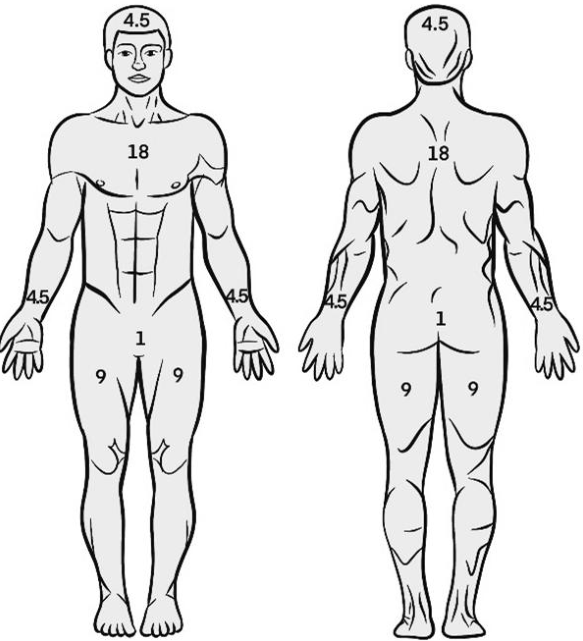
Fig. 12-4 from U.S. Army ATP 4-02.11, Casualty Response, Tactical Combat Casualty Care, and First Aid (23 March 2026), p. 116. Public domain; cropped. Not endorsed by the U.S. Army or Department of Defense.
Added up, ATP's list comes to 101 percent, not 100, because it gives both the pubic area and the buttocks 1 percent each. That extra point doesn't matter for a rough estimate at home, and ATP's own advice (below) is to round up anyway.
Two shortcuts from ATP make it usable:
- The palm rule. The size of the injured person's palm is about 1 percent of their body. Count how many of their palms would cover the burn. This works for small or scattered burns where the nines are too coarse.
- Halves. If half of an area is burned, take half its value. Half the front of the torso is 9 percent.
ATP says to round up to the nearest 10 percent when estimating, and that superficial (first-degree) burns are not counted: only partial- and full-thickness burns go into the number.
Why the number matters. The American Burn Association recommends immediate consultation with a burn center, and consideration of transfer, for partial-thickness burns of 10 percent or more of the body. That is about ten of the person's palms, or a little more than one whole arm. Telling the 911 dispatcher or the emergency room "about 10 percent, partial thickness, on the arm and chest" is exactly the kind of information they need.
First aid for heat burns, step by step
These steps combine CERT, ATP 4-02.11, the Red Cross Scientific Advisory Council and ACEP. Where they differ, the difference is explained below.
- Make sure you won't be burned too. CERT starts every burn with a size-up: what caused it, whether the danger is still present, and when the burning stopped. ATP says that any treatment before the person is away from the source, or before the flames are out, is ineffective and harmful to both of you.
- Stop the burning. Put out any flames. Move the person away from the heat. ATP and CERT both say to remove smoldering or hot clothing, but leave anything stuck to the skin and cut around it. The Red Cross advisory explains why speed matters: clothing and jewelry over a burn can keep burning the skin.
- Take off rings, watches and tight things near the burn. CERT and ACEP both say so. Burns swell, and a ring that comes off easily now may have to be cut off later.
- Cool the burn with cool running water. The Red Cross Scientific Advisory Council recommends starting right away, preferably with cool running water, for at least 10 minutes and ideally 20. If there's no running water, a clean, cool or cold (not freezing) compress or cold pack will do. It found evidence that cooling reduces the depth and size of burns, pain, and hospital stays, and that cooling may still help up to 3 hours after the injury. Tap water, a garden hose, or soaked and wrung-out towels all work, as CERT notes.
- Watch for chilling. The Red Cross advisory says to watch for hypothermia when cooling large burns or burns on small children, and not to cool for more than 40 minutes. CERT warns that rapid temperature changes can bring on shock, so it says to judge the size and severity of the burn before you cool. Cool the burn, not the whole person: keep the rest of them covered and warm.
- Cover it loosely. CERT's instruction is a loose layer of dry, sterile dressing, which shuts out air, eases the pain and helps keep germs out. On badly burned hands and feet, wrap each finger and toe loosely and separately. ATP notes that gauze or clean cloth can serve if you have nothing else. A nonstick dressing is the better choice where blisters have broken (MedlinePlus Magazine).
- Raise it. For a serious burn, ACEP says to keep the burned area raised to reduce swelling. MedlinePlus Magazine says to keep a third-degree burn raised above the level of the heart while you wait for help.
- Keep them warm and watch them. ATP's steps for every burn are the same: check for other injuries, watch the breathing, treat for shock if it appears, and get medical help.
The cooling time: where the sources differ
CERT's 2019 manual says to immerse the hot skin or clothing in cool water for not more than one minute, or to cover it with cool, wet, wrung-out compresses. The American Red Cross Scientific Advisory Council, reviewing the research in the same year, recommends at least 10 minutes, ideally 20, and no more than 40. The Red Cross advisory explains the history: the 2015 American Heart Association and Red Cross first aid guidelines set a 10-minute minimum, and some burn specialists argue 20 minutes is the true minimum.
Read closely, the two overlap more than the numbers suggest. CERT's one-minute line applies to skin or clothing that is still hot, and it sits beside CERT's warning that a sudden temperature change can bring on shock; CERT lists preventing hypothermia as the first goal of burn care. The Red Cross advisory is a review of the research on cooling itself: one study in it found benefit from anywhere between 10 and 40 minutes of cooling, and there was some evidence of harm, through hypothermia, beyond 40. ATP 4-02.11 says to cool burns with clean water and gives no time. All three agree on guarding against chilling.
This page follows the Red Cross figure because it is the one based on a review of the cooling evidence, and it is the newer guidance:
- A burn on a hand, arm or other small area: cool it under cool running water for at least 10 minutes, ideally 20 (Red Cross).
- A large burn, or a burn on a small child: cool the burned part, keep the rest of the person covered, and watch for hypothermia, which both CERT and the Red Cross warn about.
- Any burn: don't go past 40 minutes (Red Cross), and don't use ice (every source here that mentions it).
What not to do
Every source agrees on most of these:
- Don't use ice, ice water or an ice pack. CERT says ice constricts blood vessels; the Red Cross says it risks making the injury worse; ATP and ACEP say the same.
- Don't put on butter, grease, antiseptics, ointments or home remedies on a serious burn (CERT, ACEP). Cover it with a clean, dry dressing instead.
- Don't break blisters (CERT, ACEP, MedlinePlus Magazine). MedlinePlus Magazine explains that popping them raises the risk of infection.
- Don't pull off clothing stuck to the burn or peel away shreds of skin. Cut around it (CERT, ATP, ACEP).
- Don't wrap a burn tightly. ATP says elastic bandages are normally not used on burns: they are very painful, and as the burn swells they can cut off circulation.
- Don't pour water on a grease fire (ACEP).
- Don't put a person with a chemical burn in a bath. ATP warns that submerging them spreads the chemical and chills them. Use running water.
Minor burns at home
MedlinePlus Magazine gives home-care steps for first- and second-degree burns. Keep in mind ACEP's exception: any burn to the eyes, mouth, hands or genitals needs emergency care, even a mild-looking one. And if you aren't sure how deep a burn is, have it seen (American Burn Association). MedlinePlus Magazine's steps for a first-degree burn: cool it right away with cool running water or a cold, wet compress; apply petroleum jelly or aloe vera gel a few times a day; consider an over-the-counter pain reliever, used as the label directs; and keep the area out of direct heat and sun. For a small second-degree burn, it adds: leave blisters alone, and use a nonstick bandage if clothing will rub it or blisters have broken.
ACEP lists signs of infection that mean a healing burn needs medical attention right away:
A healing burn needs a doctor if
- Fever
- Pus-like or foul-smelling drainage
- Excessive swelling, or redness that spreads
- A blister filled with greenish or brownish fluid
- It hasn't healed in 10 days to two weeks (ACEP lists this separately as a reason to get care)
The wounds page has more on the signs of infection and on tetanus. CDC classes burns among the wounds that carry a higher tetanus risk, so check the date of the last tetanus shot.
Chemical burns
Chemical burns aren't always obvious. CERT says to consider one when the skin is burning and there's no sign of fire, and that it's best to leave chemical burn treatment to trained professionals when you can. Until they arrive:
- Protect yourself. Gloves and eye protection at least (CERT, ACEP).
- Remove contaminated clothing and jewelry (CERT, ACEP).
- Brush off dry chemical gently with a dry cloth or gloved hand, away from the eyes and away from both of you (CERT, ATP).
- Flush with lots of cool running water. CERT says at least 10 minutes; ACEP says 20 minutes or longer, or until help arrives, and suggests a shower for 15 to 20 minutes, keeping the eyes protected. Twenty minutes meets both. CERT's reason for flushing is that a steady flow of water thins the chemical out before it can do more damage.
- Cover loosely with a dry, clean cloth that won't stick, and use a cool, wet compress for pain (CERT).
- Get medical care. The American Burn Association recommends a burn-center consultation for all chemical injuries, and ACEP says to call 911. Bring the product container so the hospital and Poison Control know what it was.
Electrical burns
An electrical injury can do more harm than the skin shows: ATP warns of breathing and heart-rhythm problems, and the American Burn Association recommends follow-up to screen for symptoms that appear later.
- Don't touch the person until the power is off. ATP's warning is blunt: touch them or the source with bare hands and you'll be injured too. Turn the power off at the switch, plug or breaker.
- If the power can't be turned off, ATP says to drag the person clear with something that doesn't conduct electricity, such as rope, clothing or dry wood.
- Check breathing. ATP says high-voltage burns and lightning can cause unconsciousness, trouble breathing and an irregular heartbeat. ACEP says to check breathing and, if the person isn't breathing, to start rescue breathing if you know how. The CPR and AEDs page covers what to do for someone who isn't breathing.
- Cover the burns with cool, wet cloths, raise burned arms and legs above the heart, and don't use butter or ointments or break blisters (ACEP).
- Get them seen, even if they feel fine. The American Burn Association recommends immediate burn-center consultation for all high-voltage (1,000 volts or more) and lightning injuries, and consultation for low-voltage injuries, such as household current, with burn-center follow-up considered to screen for symptoms that appear later and for vision problems.
Burns that need a burn center
The American Burn Association publishes referral guidelines for clinicians. They're written for hospitals, but they tell a household which burns deserve more than an urgent-care visit:
| Recommend immediate burn-center consultation, and consider transfer | Recommend consultation |
|---|---|
| Any full-thickness burn | Partial-thickness burns under 10% of the body |
| Partial-thickness burns of 10% of the body or more | Any burn that may be deep, whatever its size |
| Deep burns of the face, hands, feet, genitals, perineum or over joints | All chemical injuries |
| Suspected inhalation injury (facial flash burns, singed facial hair, smoke exposure) | Low-voltage (under 1,000 V) electrical injuries |
| High-voltage (1,000 V or more) electrical and lightning injuries | Children 14 or younger, or under 30 kg (about 66 lb) |
| Burns in someone with other injuries or illnesses, or with pain that can't be controlled |
ACEP's advice for the public is simpler and stricter on one point: get emergency care for any burn to the eyes, mouth, hands or genitals, even a mild one.
Burns in the airway. ATP warns that facial burns, especially from a fire in a closed space, may come with an injury to the airway, and says to watch these people closely for breathing problems. The American Burn Association treats facial flash burns, singed facial hair and smoke exposure as signs of a possible inhalation injury. After a fire, any of those, or any trouble breathing, means 911, even if the skin burns look small.
Burns, shock and cold
A large burn leaks fluid and lets heat escape. ATP says burn patients are especially prone to hypothermia whatever the weather, and recommends getting them off the ground onto an insulated surface and covering them. For burns over 20 percent of the body, it covers the burned areas with a heat-reflective shield, and its expedient-care section names emergency blankets for the same job. At home, a clean, dry sheet over the burns and a blanket over that keeps heat in. Watch closely for shock, which ATP says to check for in every burn.
ATP also reminds rescuers to treat any life-threatening injury first: a burned person who is also bleeding heavily needs the bleeding controlled first, and ATP says those treatments can be applied through burned skin. See severe bleeding.
A burn kit for the house
Most of what burn first aid needs is water. The rest is in any well-stocked first aid kit:
Burn supplies
- Sterile gauze pads and rolls, enough to cover a forearm loosely
- Nonstick (non-adherent) dressings for broken blisters
- A clean sheet or large clean cloth for big burns, and an emergency blanket
- Gloves, for chemical burns and to protect the wound
- Trauma shears, to cut clothing around a burn
- Petroleum jelly or aloe vera gel, for minor burns once cooled
- Over-the-counter pain reliever, used as the label directs
- Poison Control's number, 1-800-222-1222, written inside the lid
- A water supply you can spare: a burn may need 10 to 20 minutes of running water. See how to store water
Where to get trained
Cooling and covering a burn take a few minutes to learn, but judging depth and size is easier after you've seen it taught with pictures and practiced with an instructor.
- CERT (Community Emergency Response Team). FEMA's volunteer course includes a disaster medical operations unit that covers burns, wound care and splinting. Find a program through Ready.gov's CERT page.
- American Red Cross First Aid. Classes for the public in first aid, CPR and AED use: redcross.org/take-a-class/first-aid.
- American Heart Association Heartsaver First Aid. The AHA's first aid course for the public, often taken with CPR: Heartsaver course options.
- Stop the Bleed. Not a burn course, but a burn from a fire or explosion often comes with bleeding injuries, and ATP says to treat those first. See stopthebleed.org.
Sources
- U.S. Army — ATP 4-02.11, Casualty Response, Tactical Combat Casualty Care, and First Aid (23 March 2026), Chapter 12, Burns
- FEMA — CERT Basic Training Participant Manual (2019), Unit 3, Treating Burns
- American Red Cross Scientific Advisory Council — Burn Cooling Advisory (June 2019)
- American College of Emergency Physicians — Know When to Go: Burns
- American Burn Association — Burn Center Referral Guidelines
- MedlinePlus (NIH) — Burns
- CDC — Tetanus: Clinical Guidance (wound management)
- NIH MedlinePlus Magazine — When Getting Warm Goes Wrong: How to Treat and Prevent Burns (updated 5 March 2024)