Chapter 3 · Food
Building a three-month pantry of everyday foods
The pantry that carries a household through a long emergency is mostly the food it eats every week, bought a little ahead and kept moving. Here is how to count it, where to keep it, how long it lasts and how to keep it fresh.
Read first: The 72-hour kit
There are two kinds of stored food. One is the deep store of rice, beans and wheat sealed away for years, which long-term food storage covers. The other is the pantry: the canned soup, pasta, peanut butter and cereal the household already eats, kept in larger amounts than usual and used up in order. This page is about the second kind.
The pantry matters more than it looks. It is the food a family will actually eat without learning new recipes, it costs nothing extra over time because it is eaten rather than thrown out, and it covers the long middle of an emergency: the weeks after the 72-hour kit is gone, when stores are empty or a paycheck has stopped.
How much the sources say to keep
No federal source sets a three-month figure. The official advice climbs in stages, and three months sits near the top of it.
| Source | Amount | Notes |
|---|---|---|
| Ready.gov | At least a several-day supply of non-perishable food | Foods that need no refrigeration, cooking, water or special preparation |
| FEMA, Food and Water in an Emergency (2004) | Consider a two-week supply | FEMA calls a two-week cut-off unlikely but worth planning for |
| Be Ready Utah | A minimum of one month for the household, aiming for three months | It suggests six months to a year as a longer-term goal |
Be Ready Utah, the state emergency agency's preparedness program, is the source that describes the three-month pantry most fully. Its approach: start with a three-day supply in the disaster kit, then build to at least a month of the foods the household eats every day, then keep going toward three months as budget and space allow.
Read the stages as a ladder, not a test. FEMA's booklet points out that most families don't need to buy special food at all to start: the canned goods, dry mixes and staples already on the shelves are the beginning of the supply.
Why everyday foods, not special ones
FEMA gives the reason in plain terms: familiar foods lift morale and give a feeling of security in times of stress. A stressful week is a bad time to discover that nobody likes the bucket of lentils.
There are practical reasons too:
- It rotates itself. Food you eat every week never sits long enough to go stale. Be Ready Utah's rule is to eat what you store, so the stock keeps turning over and little is thrown away.
- You already know how to cook it. Be Ready Utah advises practicing with stored food and supplies before an emergency. With pantry food, you already do.
- It costs no more over time. Buying ahead of need spends the same money earlier. Nothing is lost unless food expires unused.
The long-term store and the pantry work together. The deep store holds calories for years with little attention; the pantry holds variety, protein, fat and the foods that make plain rice and beans worth eating.
Counting it: build from a menu
The most reliable way to size a pantry is the one Be Ready Utah recommends: write a menu from your own foods, then multiply. Counting cans in the abstract tends to produce a shelf of mismatched items that don't make meals.
- List the household's needs first. Be Ready Utah puts dietary needs, allergies and food restrictions at the top of the list. FEMA adds babies, toddlers, older people and anyone ill, and notes that nursing mothers may need liquid formula in case they can't nurse.
- Write a month of simple meals using only shelf-stable food, as Be Ready Utah suggests (two weeks is fine if a month is too much to plan at once): breakfasts, lunches, dinners and snacks. Favor foods that need no refrigeration, water or cooking, which FEMA calls the best choice, and plan some meals that need only a little heat (see cooking without power).
- Turn the menu into a shopping list: how many cans of soup, boxes of pasta, jars of peanut butter and so on for that month.
- Multiply. For three months, multiply a one-month list by 3. If you planned two weeks instead, three months is about 13 weeks, so multiply by about 6.5.
- Check it against nutrition. Be Ready Utah's list of staples covers grains, legumes, fats and oils, milk (dry, shelf-stable UHT or whey), sugars, iodized salt, leavenings and a source of vitamin C or a multivitamin. FEMA advises at least one well-balanced meal a day and enough calories to do whatever work an emergency demands.
Pantry worksheet
| Item | Used in the one-month menu | × 3 for three months | On hand | To buy |
|---|---|---|---|---|
| Example: canned soup (cans) | 13 | 39 | 12 | 27 |
The example row is an illustration, not a recommendation. Fill in your own menu's numbers.
Two items get forgotten in almost every count. FEMA and Ready.gov both list a manual can opener and eating utensils. FEMA also reminds you to store food for your pets (see pets in an emergency).
Water belongs in the count
Food and water are planned together. FEMA's guidance is at least one gallon of water per person per day, and a two-week supply if you can store it. Dry pasta, rice and beans all need water to cook, so a pantry heavy in dry goods needs more water than one heavy in canned goods. FEMA also warns that if water is short, salty foods will make you thirsty; it suggests salt-free crackers, whole-grain cereals and canned foods with a lot of liquid instead. Storing the water itself is covered in how to store water.
Building it a little at a time
Be Ready Utah's advice on cost is the practical heart of the method:
- Add a few items on every shopping trip. A pantry built over months doesn't strain a budget the way one bought in a weekend does.
- Buy in bulk when it's cheaper, but only as much as the household will use before it expires.
- Cover the basics first, then desserts and comfort foods.
- Set aside a fixed amount each month for emergency food.
- Don't go into debt for it. The agency's own words are that something is always better than nothing.
A simple habit does most of the work: when you open the last can of something, buy two.
Where to keep it
Heat is the enemy of every stored food, canned or dry. Utah State University Extension passes on a USDA rule of thumb that storage life is cut in half for every 10.8 degrees of temperature rise. Be Ready Utah gives a different version of the same idea: half the shelf life is lost for every 18°F above ideal. The two disagree on the number but agree on the point, which is that a few degrees cooler buys real time.
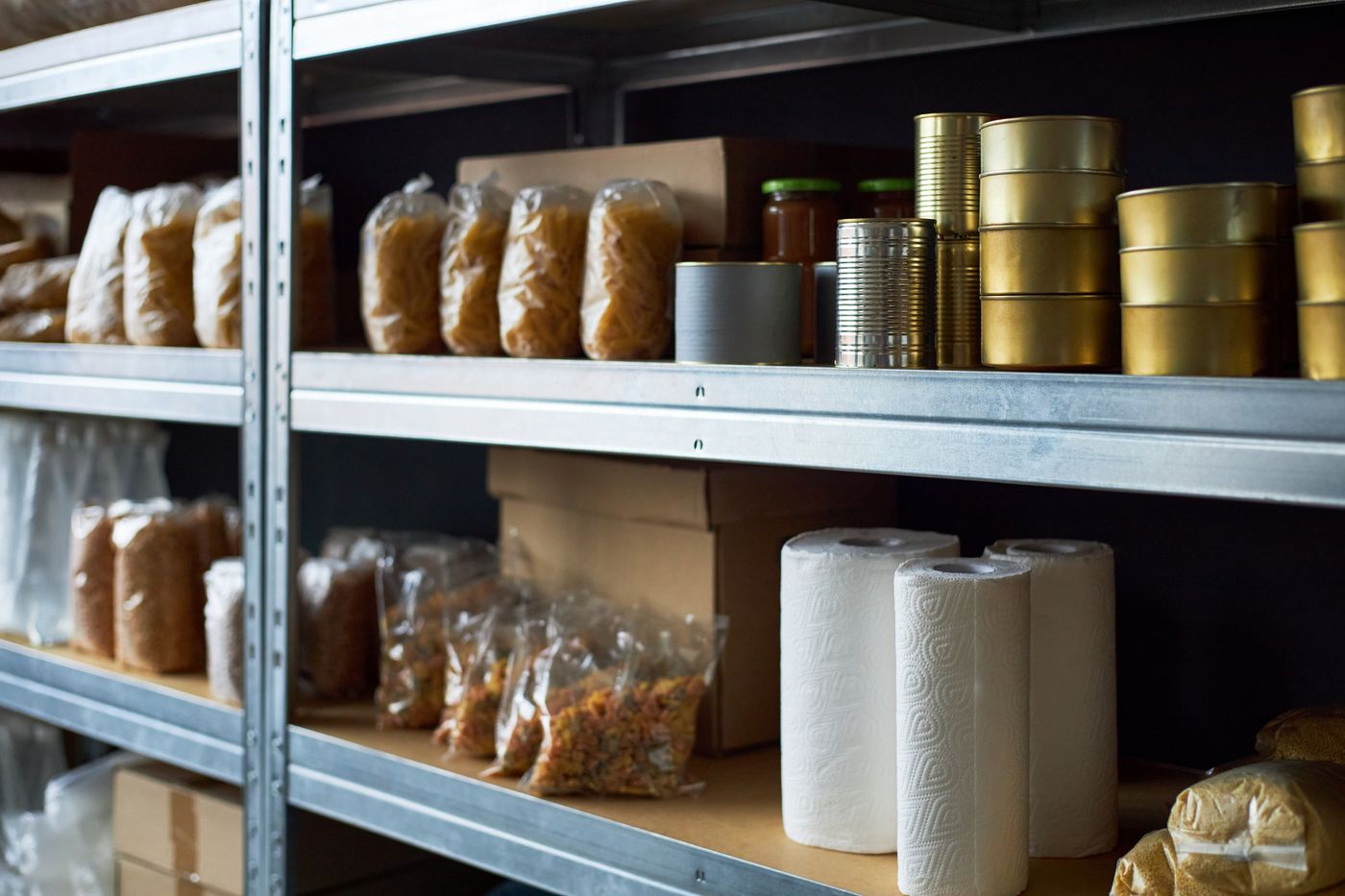
Photo: iStock.
| Source | Best temperature | Avoid |
|---|---|---|
| Clemson Extension | 50–70°F for canned food | Storage time drops significantly above 75°F |
| USDA FSIS | Below 85°F | Over 100°F is harmful to canned goods |
| Ohio State Extension | Moderately cool, not freezing | Canned food above 70°F has a shorter shelf life; never store above 95°F |
| Be Ready Utah | 40–70°F, cool, dark and dry | Light, damp, contact with floors and walls |
Good places meet those conditions: often an interior closet or a basement that stays dry.
Poor places, according to FSIS, Ohio State and Washington State University: above or beside the stove, under the sink, near the dishwasher or the refrigerator's exhaust, in a damp garage or basement, or anywhere exposed to temperature extremes. Clemson adds hot pipes, furnaces and direct sunlight. Missouri Extension says to keep metal cans off the floor, where moisture rusts them, and Be Ready Utah says to keep containers off floors and walls on pallets or shelving so air can move around them.
Keeping pests out
FEMA's storage tips are simple and worth following:
- Open boxes and resealable packages carefully so they close tightly after each use.
- Wrap crackers and cookies in plastic bags and keep them in sealed containers.
- Empty opened sugar, dried fruit and nuts into screw-top jars or airtight canisters.
- Inspect all food for signs of spoilage before use.
Grains bought in bulk can carry insect eggs. Freezing them before storage, and packing them in sealed containers, is covered in long-term food storage and Mylar bags and buckets.
How long pantry food keeps
Two kinds of chart exist, and they answer different questions. USDA's Food Safety and Inspection Service (FSIS) gives how long shelf-stable foods keep on the shelf. Ohio State's pantry chart gives recommended times for best quality at 70°F. Neither is a hard safety deadline.
| Food | USDA FSIS | Ohio State (quality at 70°F) | FEMA (2004) |
|---|---|---|---|
| Low-acid canned food: meat, poultry, stews, soups other than tomato, potatoes, corn, carrots, beans, peas | 2 to 5 years | Canned foods, unopened: 12 months | Canned soups and vegetables: within 1 year or by the label date |
| High-acid canned food: tomatoes, fruit juices, most fruit, pickles, sauerkraut | 12 to 18 months | Canned fruit juices: 9 months | Canned fruit and juice: within 1 year or by the label date |
| Home-canned food | 12 months | — | — |
| Tuna and other seafood in retort pouches | 18 months | — | — |
| Rice and dried pasta | 2 years | White rice 2 years; pasta 2 years; brown rice 6–12 months | White rice and dry pasta: indefinitely, in proper containers |
| Commercially packaged jerky | 12 months | — | — |
| Peanut butter | — | Unopened 6–9 months | Within 1 year |
| Salad oils | — | Unopened 6 months | Vegetable oils: indefinitely |
| White or whole-wheat flour | — | 6–8 months | — |
| Dried peas and beans | — | 12 months | — |
| Ready-to-eat cereal | — | Unopened 6–12 months | Within 1 year |
| Crackers | — | 3 months | Within 6 months |
| Nonfat dry milk | — | Unopened 6 months | Boxed: within 6 months; nitrogen-packed cans: indefinitely |
| Granulated sugar | — | 2 years | — |
| Honey | — | 12 months | — |
| Dried fruit | — | 6 months | Within 6 months |
Why the sources disagree
The gaps are large, especially for canned food (12 months from Ohio State against two to five years from FSIS for low-acid cans) and for oil (6 months against "indefinitely"). They are measuring different things. Clemson's fact sheet puts it plainly: storage never improves food, it only slows the decline. A quality chart tells you when food is at its best; FSIS's shelf times are longer because they describe how long it stays usable when stored well. FEMA's "indefinitely" list from 2004 is the most generous and the oldest; the Almanac's advice is to plan rotation on the shorter figures and treat the longer ones as a margin.
Nutrition fades on its own timetable. Missouri Extension notes that minerals hold steady in canned food and most vitamins stay close to their original level, but vitamins A and C drop during canning and then lose another 5 to 20% a year.
What the date on the package means
FSIS says that, except for infant formula and some baby food, dates on food are not required by federal law, and that dating is for quality, not safety. A shelf-stable product can be used safely after its "sell-by" date. Food past a "use-by" date is still safe, FSIS says, but may not be at its best. Utah State's extension service draws the same line between a best-if-used-by date and the longer time a food stays edible.
Cans: when to throw them out
Most of the safety risk in a pantry is in damaged cans. FSIS gives the clearest rules:
| What you see | What to do (FSIS unless noted) |
|---|---|
| Swollen or bulging can | Throw it out. Swelling can mean contamination with the bacteria that cause botulism |
| Leaking can | Don't buy or use it (FSIS, Ohio State) |
| Small dent, can otherwise in good shape | The food should be safe to eat |
| Deep dent (one you can lay a finger into), or a sharp dent on the top or side seam | Throw it out: a damaged seam can let bacteria in |
| Light surface rust that wipes off with a finger or paper towel | Not serious; keep it |
| Heavy rust | Throw it out: it can hide tiny holes |
| Rust inside the can when opened | Don't eat the food |
| Can that froze and then thawed at 40°F or warmer, or thawed and refroze | Throw it out |
| Food that looks or smells abnormal | Throw it out, even if the can looks fine (Ready.gov). FSIS: do not taste it |
FEMA's 2004 booklet is stricter than FSIS on dents: it says to throw out canned goods that become swollen, dented or corroded, without FSIS's allowance for a small dent. FSIS is the newer and more detailed source; if you are unsure whether a dent is small, FEMA's rule is the cautious one.
Clemson adds a buying tip: dusty cans and torn labels can mean old stock.
Never taste food to test it
FSIS says plainly not to taste canned food that looks or smells wrong, and to throw away any swollen can. FSIS notes that swelling can come from the bacterium that causes botulism. If a can is swollen, leaking or deeply dented on a seam, throw it out without tasting it. Home-canned food has its own rules: FSIS says to boil it 10 minutes (high-acid) or 20 minutes (low-acid) before use.
First in, first out
Every source on pantry storage gives the same rotation rule, and the same few steps make it work.
- Date everything when it comes home. Washington State suggests writing the month and year of purchase on each can with a marker; FEMA says to date new supplies in ink or marker. Be Ready Utah adds a twist: write the use-by date, since it is the date that matters, not the purchase date.
- New in the back, old in the front. FEMA and Clemson both say to place new items behind older ones, so the oldest is always taken first.
- Look it over regularly. FSIS suggests checking the pantry every few weeks and using canned goods that have been on hand for a while.
- Keep an inventory. Be Ready Utah recommends marking items off as you use them, so you know what to replace on the next trip.
The household-wide calendar for rotating food, water, batteries, fuel and medicine is in rotation: keeping supplies fresh.
When the power goes out
FEMA gives a sensible order for eating through an outage:
- First, eat the perishable food from the refrigerator, garden and counter.
- Then the freezer. FEMA suggests posting a list of the freezer's contents on the door so you open it as little as possible.
- Finally, start on the pantry's non-perishable food and staples.
How long refrigerated and frozen food stays safe, and what to throw out, is in food safety in a power outage. The timeline of a long outage, and what fails first, is in power outages.
If food runs short
FEMA notes that food, unlike water, can be rationed safely: with reduced activity, healthy people can get by on half their usual intake for an extended period. It makes two exceptions: children and pregnant women should not have their food rationed. Water should never be rationed; drink what you need today and look for more tomorrow.
Three-month pantry
- A list of the household's diets, allergies and special needs, including infants and older people
- A one-month menu of shelf-stable meals, multiplied to the target (three times for three months)
- Mostly foods the household already eats, including some that need no cooking
- A source of vitamin C or a multivitamin
- Infant formula (ready-to-feed if possible) or baby food, if needed
- Pet food
- A manual can opener and eating utensils
- Water to match: at least one gallon per person per day, more for cooking dry foods
- Shelves in a cool, dry, dark room, off the floor and away from the stove, sink and furnace
- A marker for dating, and an inventory on the pantry door
- Screw-top jars or airtight canisters for opened sugar, nuts and dried fruit
- A way to heat food without power, and fuel for it
Where to go next
For the foods that keep for decades, and how to seal them, see long-term food storage and Mylar bags, oxygen absorbers and buckets. To cook the pantry without electricity, see cooking without power.
Sources
- FEMA — Food and Water in an Emergency (FEMA 477, 2004)
- Ready.gov — Food
- Be Ready Utah (Utah Division of Emergency Management) — Food
- USDA Food Safety and Inspection Service — Shelf-Stable Food Safety (updated October 24, 2024)
- Clemson Cooperative Extension — Safety of Stored Foods (HGIC 3520, revised 2020)
- Ohio State University Extension — Pantry Food Storage (HYG-5401, 2010)
- University of Missouri Extension — Storing canned foods (2018)
- Washington State University — How Long to Keep Canned Foods (2011)
- Utah State University Extension — 7 Factors That Prolong Your Food Storage Supply (2015)